Pasadena Garage Door Pros serves View Park-Windsor Hills, 17 miles from our Pasadena shop, working on the 1947-median housing stock's original hardware.
Most houses in View Park-Windsor Hills went up around 1947, which puts this neighborhood about a decade ahead of the 1959 median we see across the broader Pasadena service area. That matters more than it sounds like it should. A door installed on a house framed in the late 1940s was almost never a lightweight steel sectional panel - those didn't become standard until later. What you're more likely to find behind a repainted face is a heavier wood slab or an early steel door hung on side-mounted torsion hardware, sometimes retrofitted with a newer opener bolted onto a track it was never designed for.
With roughly 4,943 households in the area, the stock is compact enough that the same handful of door and track styles keep showing up job after job. That's not a bad thing for us - we get to know the patterns - but it does mean parts aren't always the ones sitting on a shelf at a big-box store. Original hinges, rollers sized for older track gauges, and non-standard spring cable diameters are the kind of thing that can add a day or two to a repair here that would be same-visit somewhere with newer builds.
The Usual Work Here
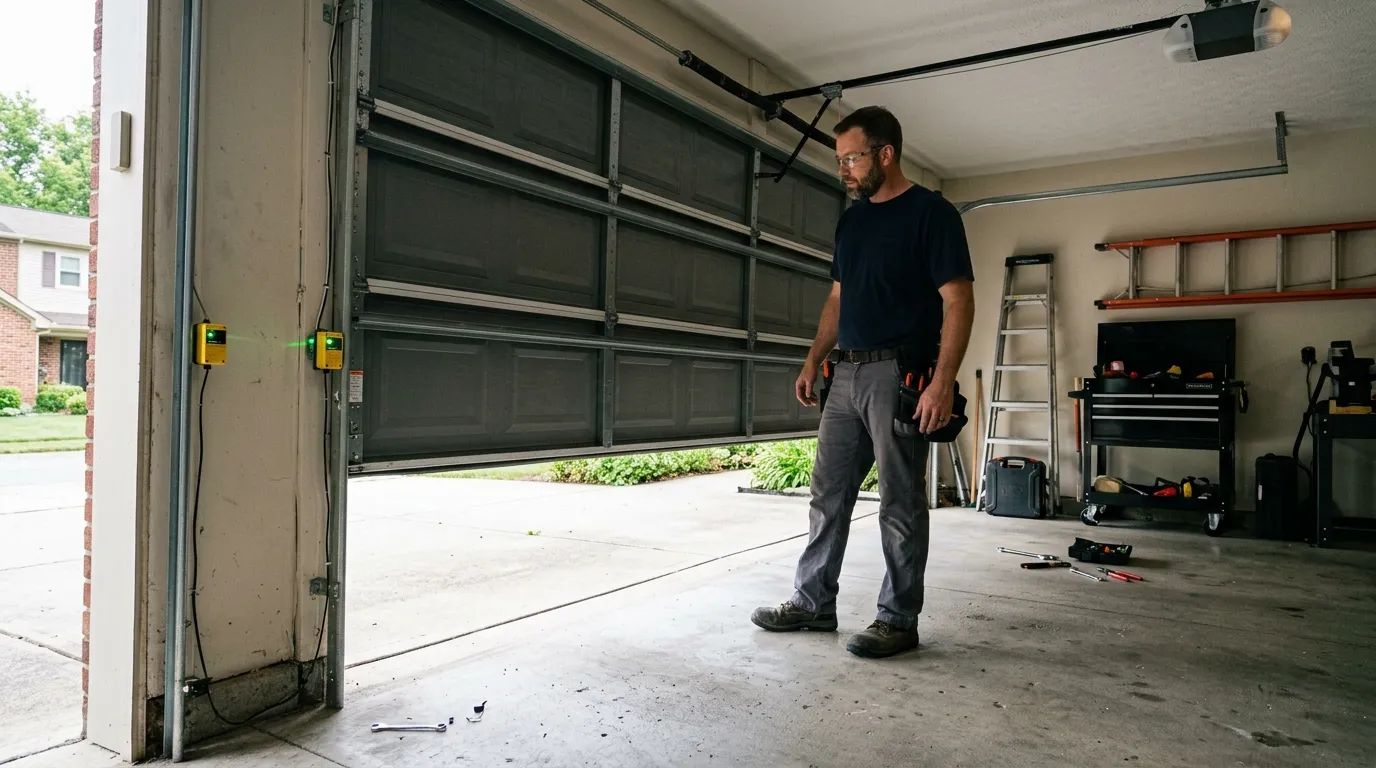
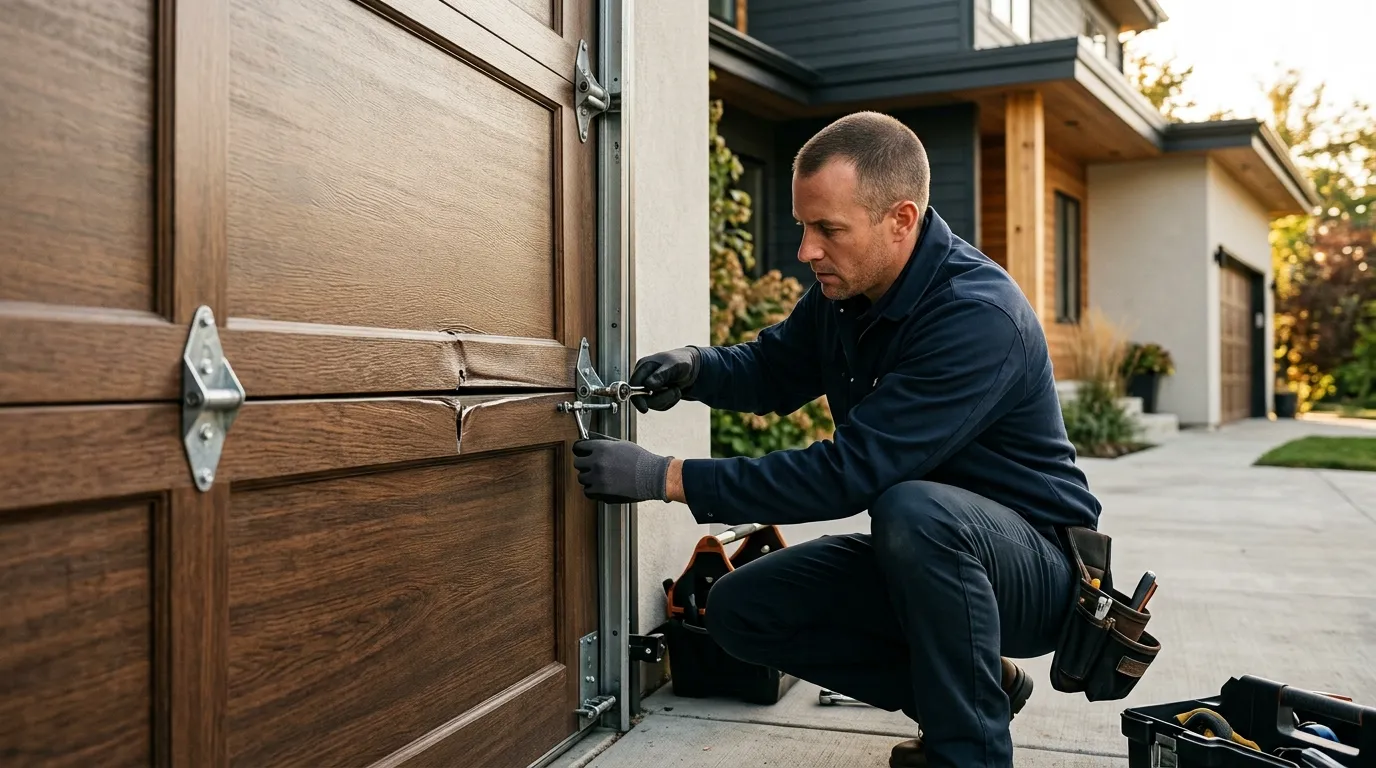
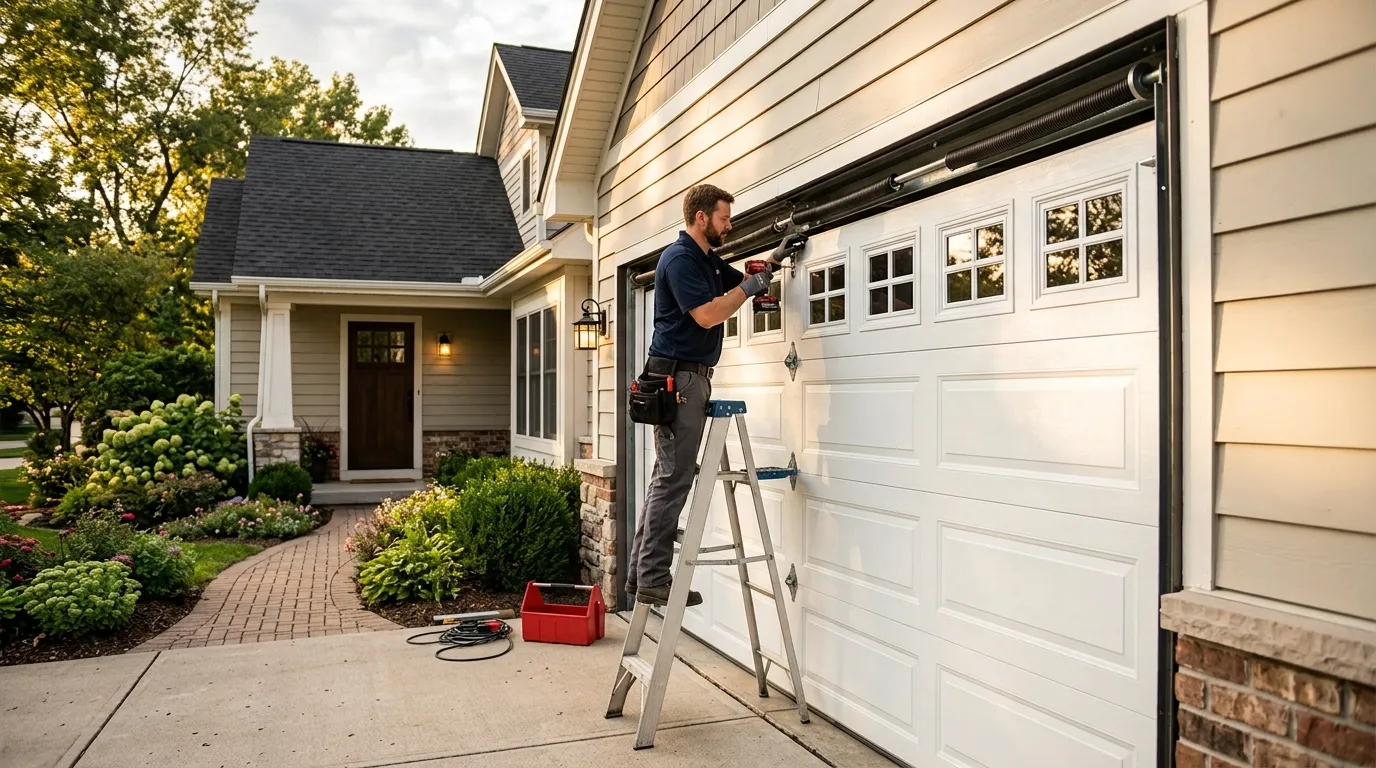
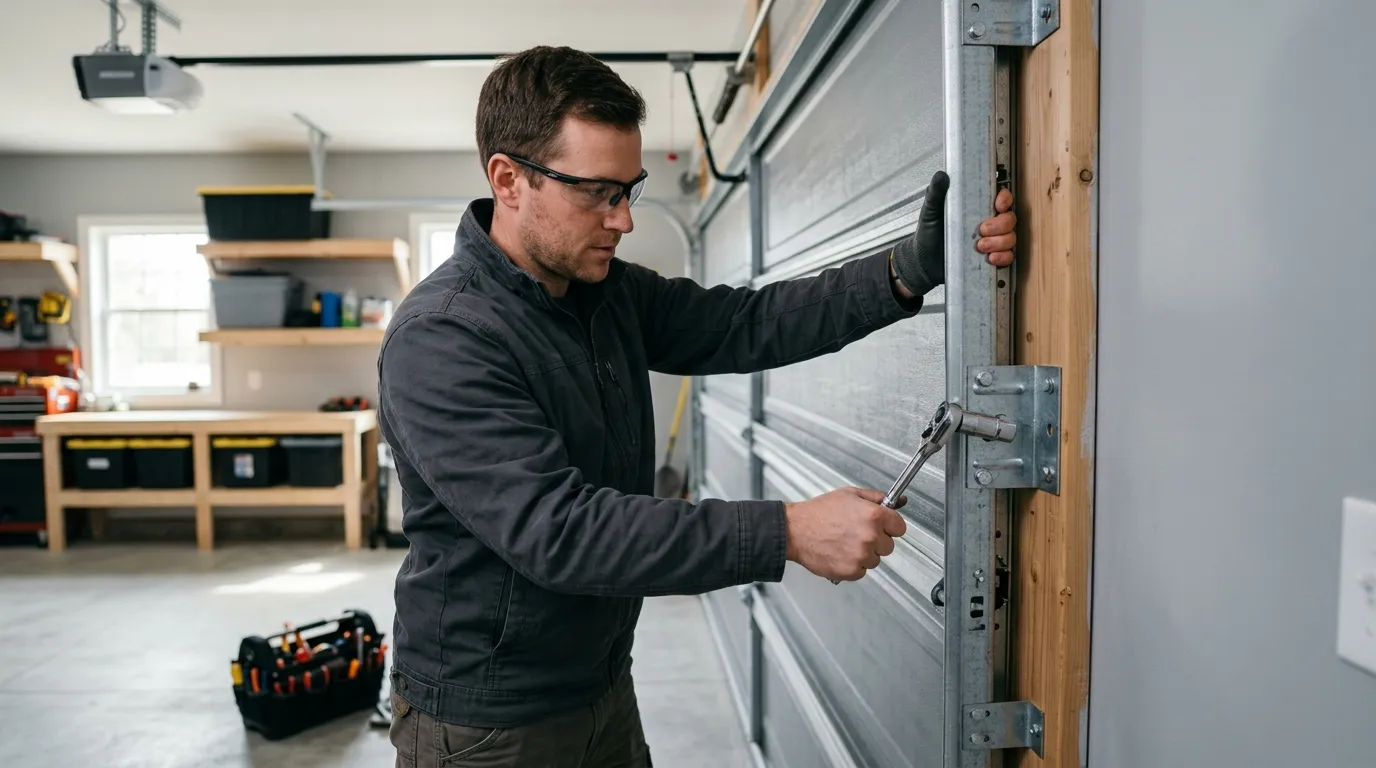
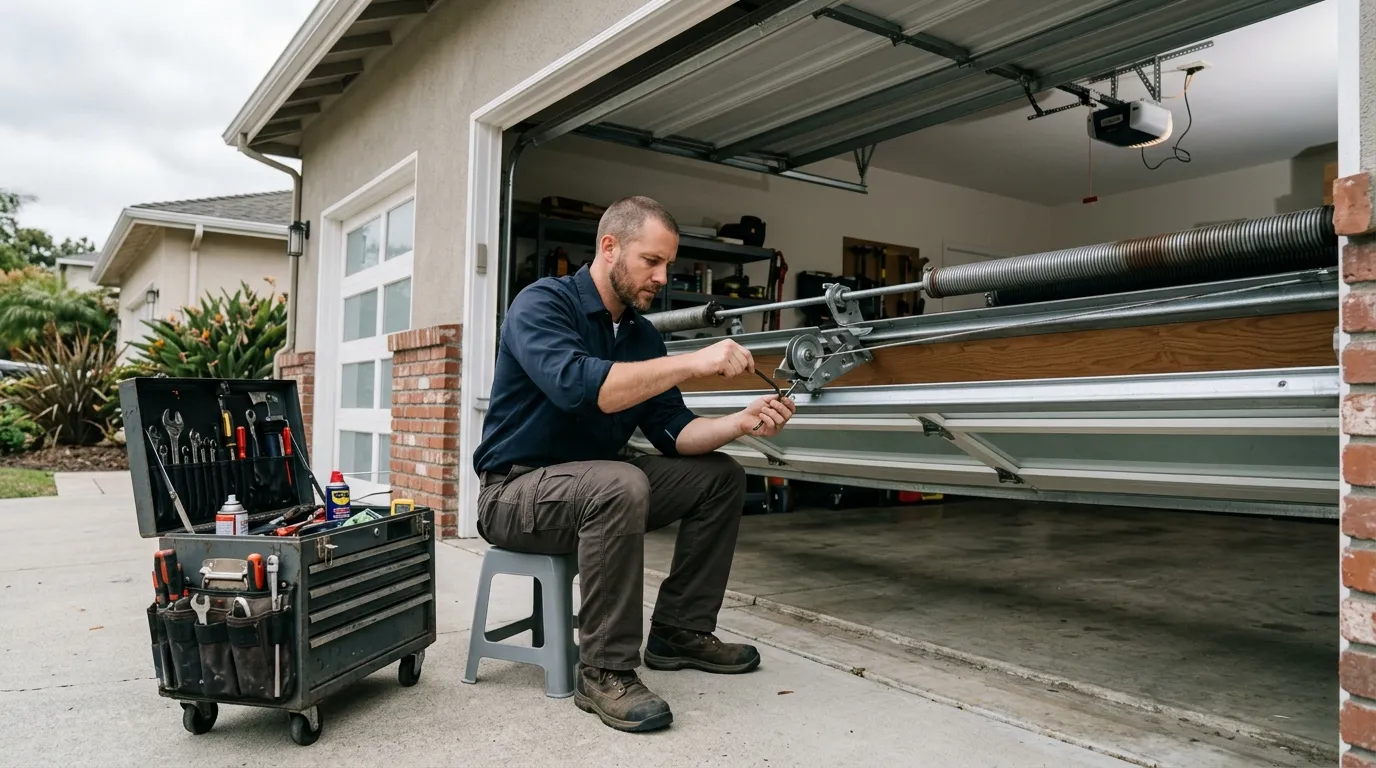
On houses from this era, the calls we get most are spring failures on the original-style torsion setups, not the extension-spring problems that show up on later tract housing. Side-mounted torsion hardware from the 1940s wears differently than the center-mounted systems that came standard from the 1970s on, and it fails in ways that surprise homeowners who've never had the door serviced - a sudden hard stop halfway up, or a door that slams down instead of lowering.
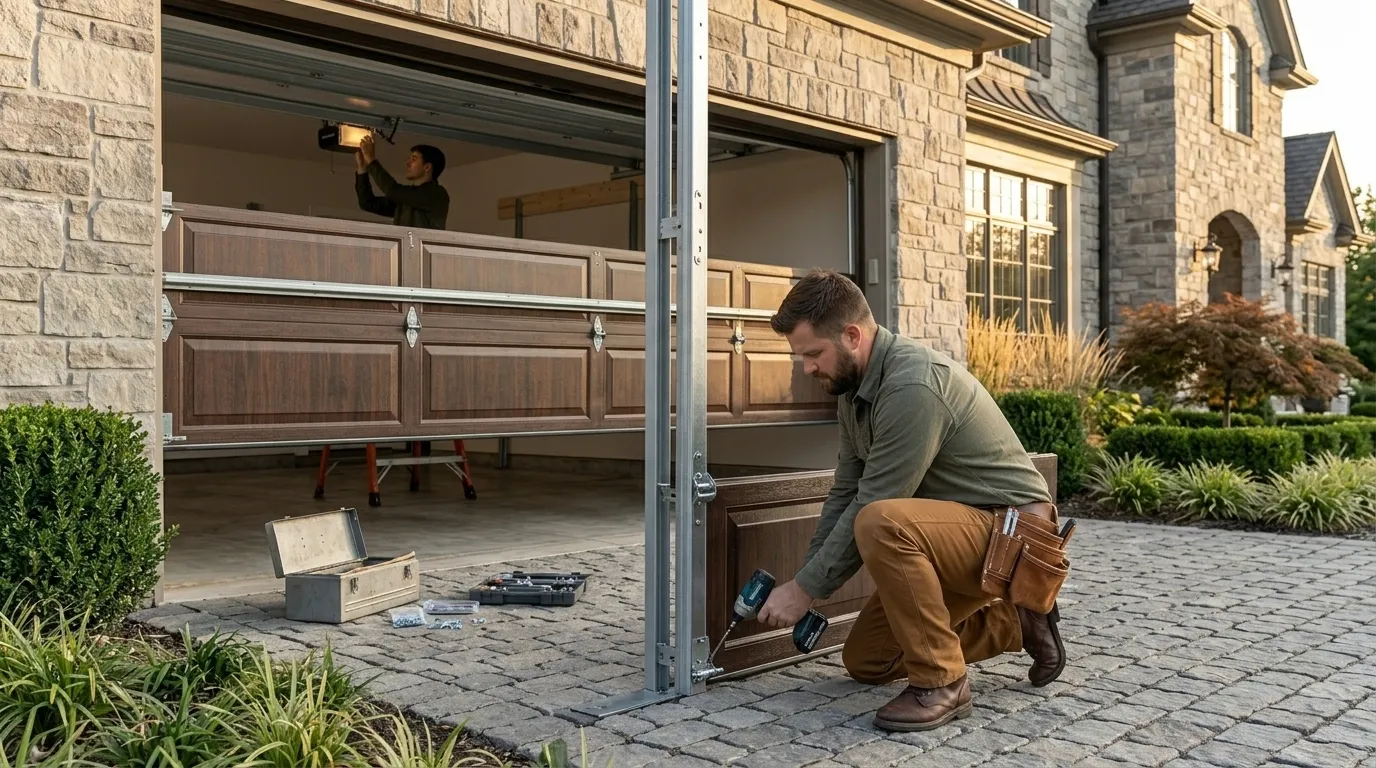
Opener retrofits are common too. A lot of these doors have had two or three openers installed over the decades, each one mounted to hardware it wasn't built for, which throws off alignment and puts uneven strain on tracks that were already older than the opener bolted to them.
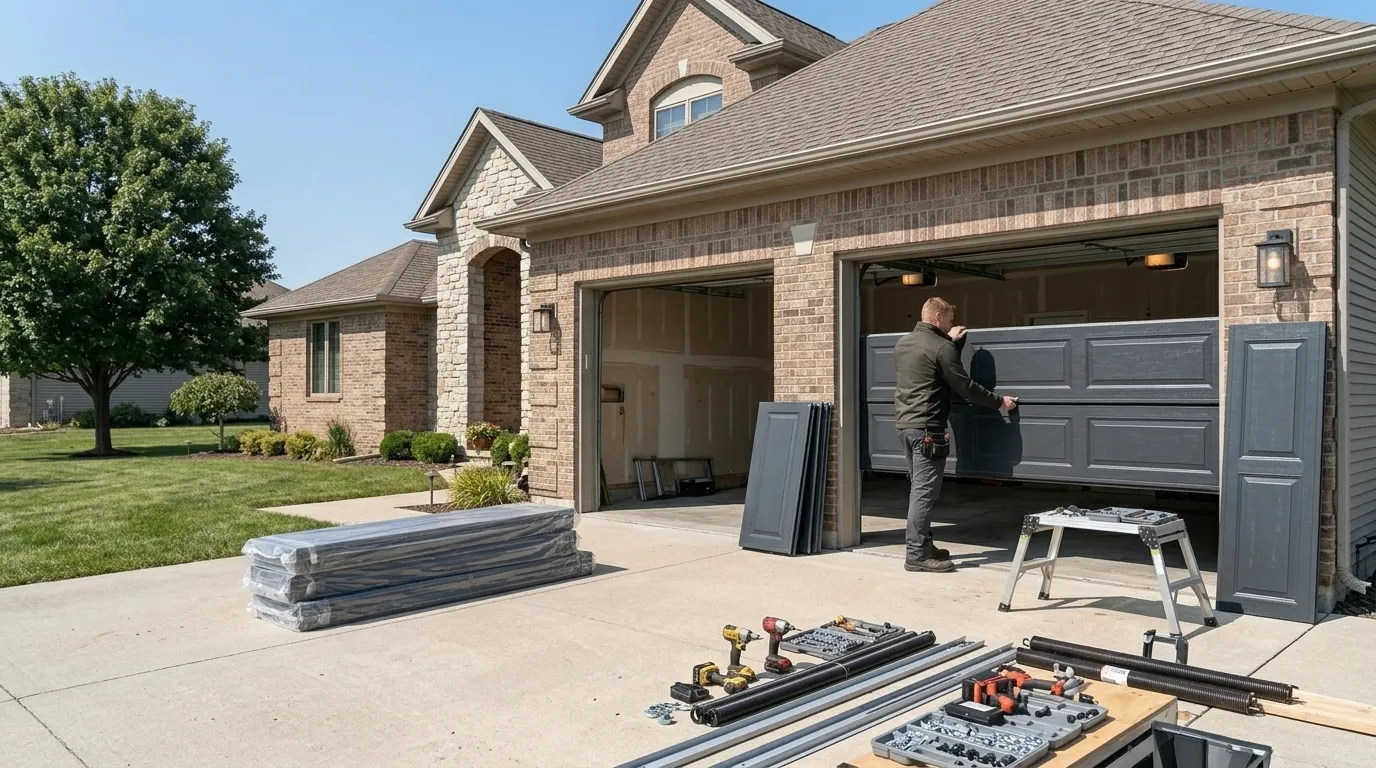
We also see more full-door replacement here than patch repair, which tracks with the income figures for the area - median household income runs around $120,604, well above the $94,792 median across the wider service area, and replacement tends to be the call homeowners make once a slab this old starts failing in more than one place at once.
Timing on This Area
We run out of Pasadena, and View Park-Windsor Hills sits about 17 miles out - one of the longer drives on our route. We don't keep a depot or crew stationed in the area, so a job here gets built into the schedule with the drive time accounted for rather than treated as a drop-in stop between closer calls.
That's the honest tradeoff: we're not going to promise a same-hour arrival the way a company based two miles away might. What we can do is plan the visit with the right parts loaded before we leave the shop, which matters more here than in newer neighborhoods, because the hardware questions above mean guessing wrong on a spring size or a hinge style costs a second trip. If a job looks likely to need a part we don't stock - an older track gauge or a discontinued panel style - we'd rather say so on the phone than find out standing in the driveway.
How That Shows Up in the Door
In practice, this means a few specific symptoms show up more here than elsewhere on our route. A door that's noticeably heavier to lift by hand than a newer sectional is often original wood or early steel, and it puts more strain on a torsion spring than the spring was rated for once it's been recoiled a few times over the decades. A cable that frays at the drum rather than snapping cleanly is another sign of an older, narrower drum diameter mismatched to a replacement cable that wasn't quite the right spec.
Track misalignment is more common too, usually from an opener added later that pulls the door at a slightly different angle than the original hardware intended. None of this means the door is unsafe to use day to day - the mild coastal climate here doesn't add the freeze-thaw stress that speeds up hardware failure elsewhere in the country - but it does mean a routine spring call on a house like this is more likely to turn into a conversation about the track and rollers too, not just the spring.
How it works
From “it’s stuck” to “it’s fixed”
01
Tell us what’s wrong
Describe the symptom - won’t open, loud bang, opener runs but the door won’t move.
02
On-site diagnosis
A technician tests the door under power and by hand and finds what actually failed.
03
Clear, up-front plan
You get the fix that’s needed and what drives the cost - before any work starts.
04
Repaired & tested
The repair is done, the door is set true and tested, and the work area left clean.
Serving Pasadena, CA - tell us what your door’s doing and we’ll take it from there.
Straight answers about garage door repair in Pasadena. Still unsure? Ask us directly.
Why does a 1947-built house need different garage door parts than a newer one nearby?
Houses built in the late 1940s in this area were more likely to get wood or early steel slabs on side-mounted torsion hardware, a different setup than the center-mounted torsion systems standard on houses built from the 1970s on. The spring sizes, cable gauges, and roller styles differ enough that a tech needs to know which era he's walking into before loading the truck.
Do you have a depot in View Park-Windsor Hills?
No. We run out of Pasadena, about 17 miles from this area, and build the drive time into scheduling rather than promising a fast local response. We'd rather set that expectation upfront than have a homeowner assume a nearby crew is available.
Is it worth repairing an original door from the 1940s or replacing it?
It depends on what's failing. If it's one spring or a bent hinge on an otherwise sound slab, repair usually makes sense. If the track, cables, and springs are all original and starting to go together, replacement is often the more practical call, especially since parts for some of the older hardware take longer to source.