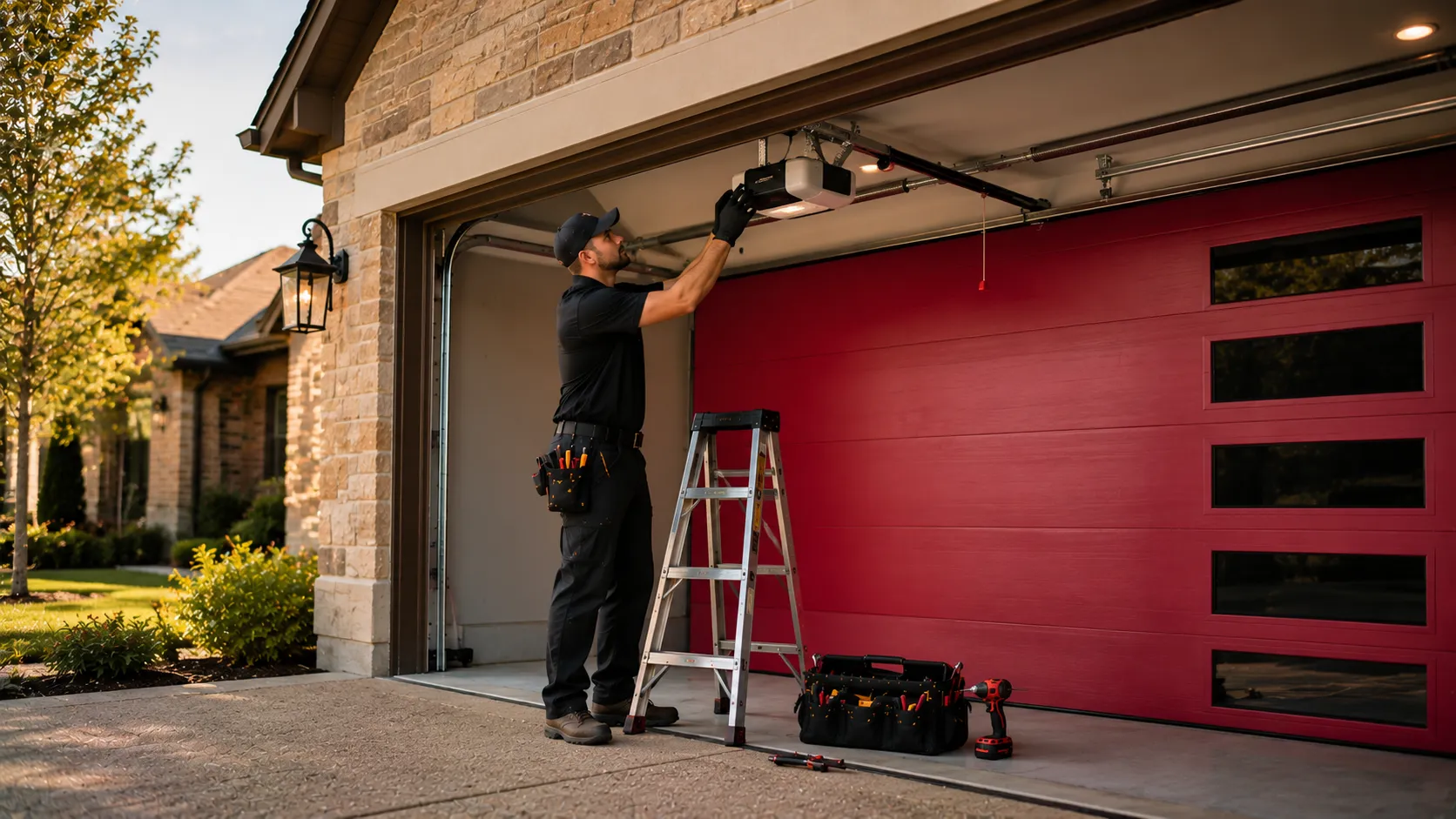
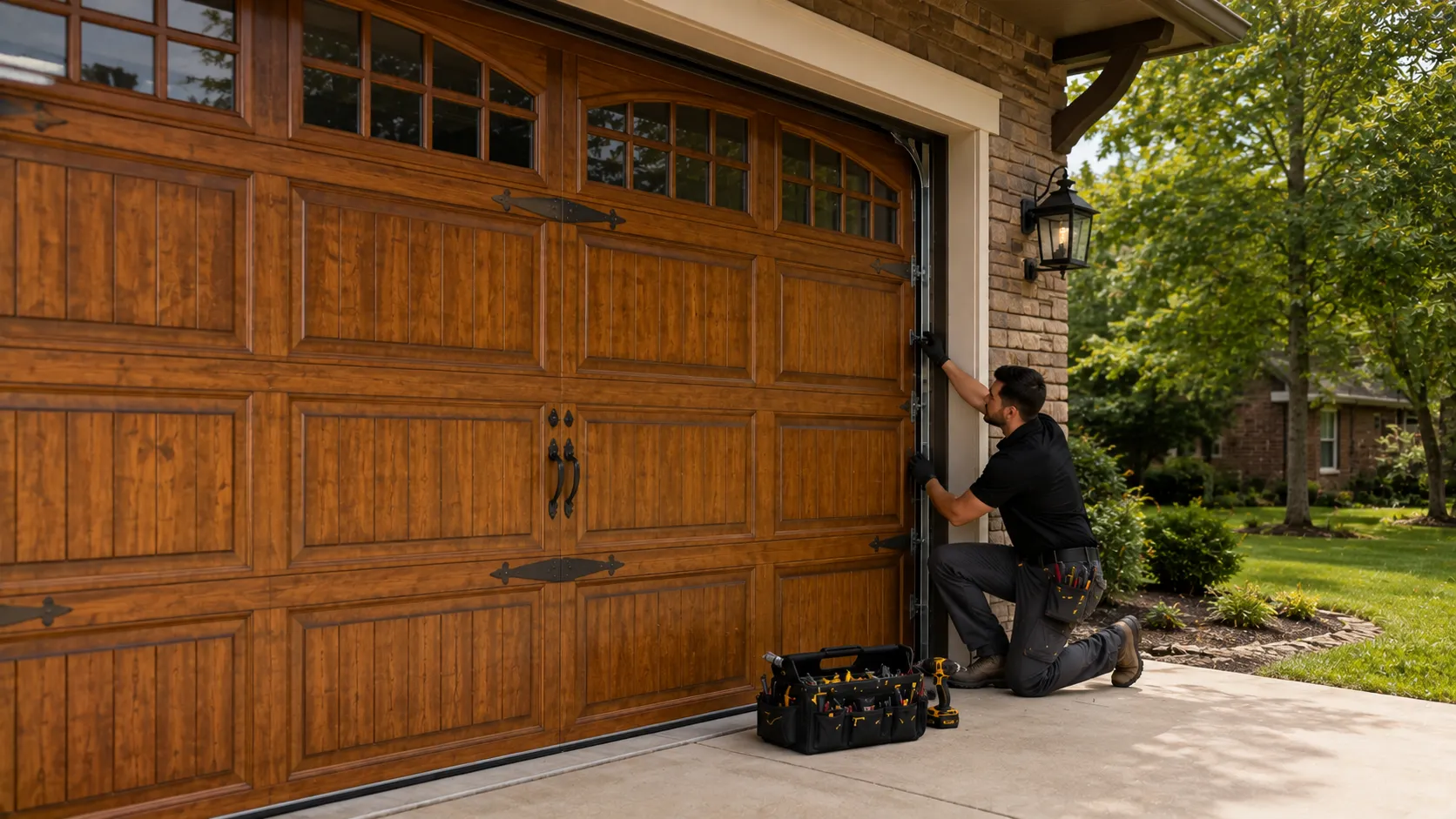
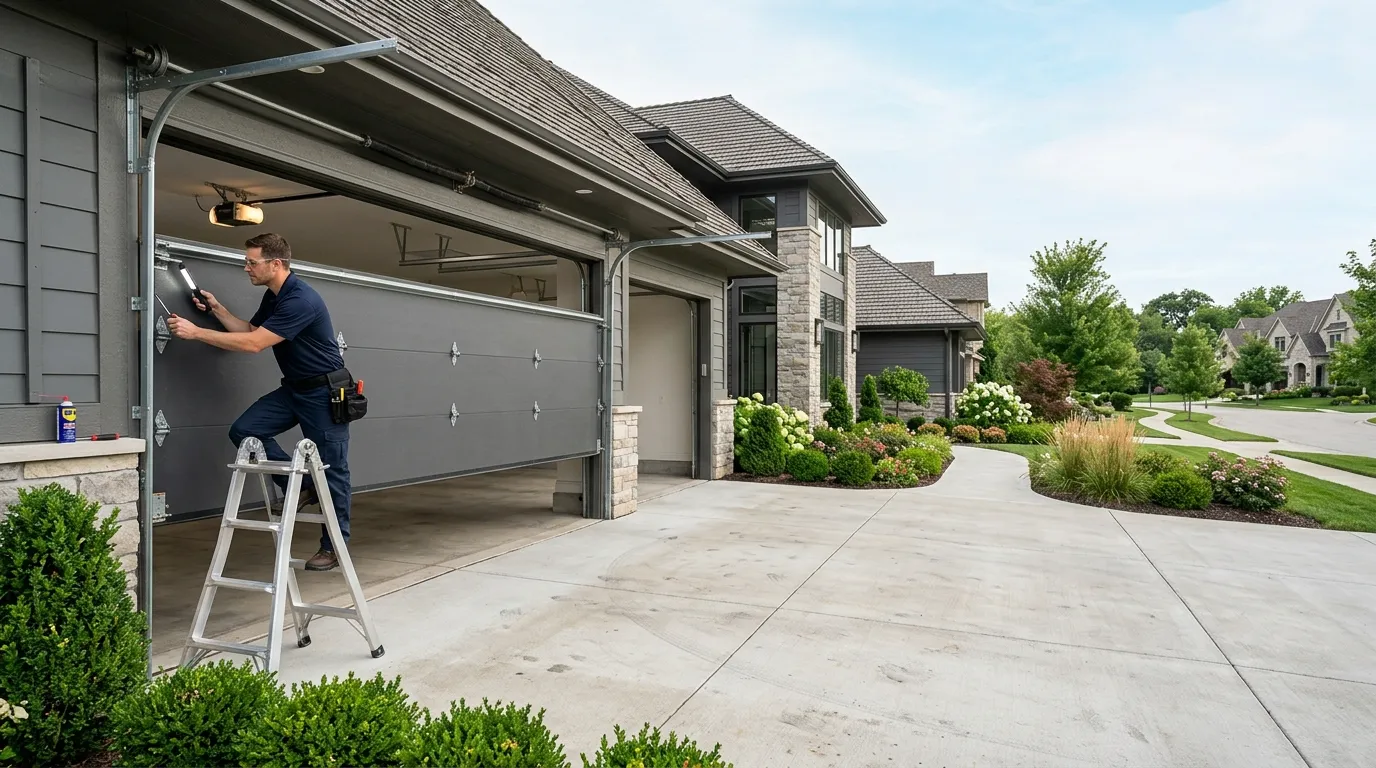
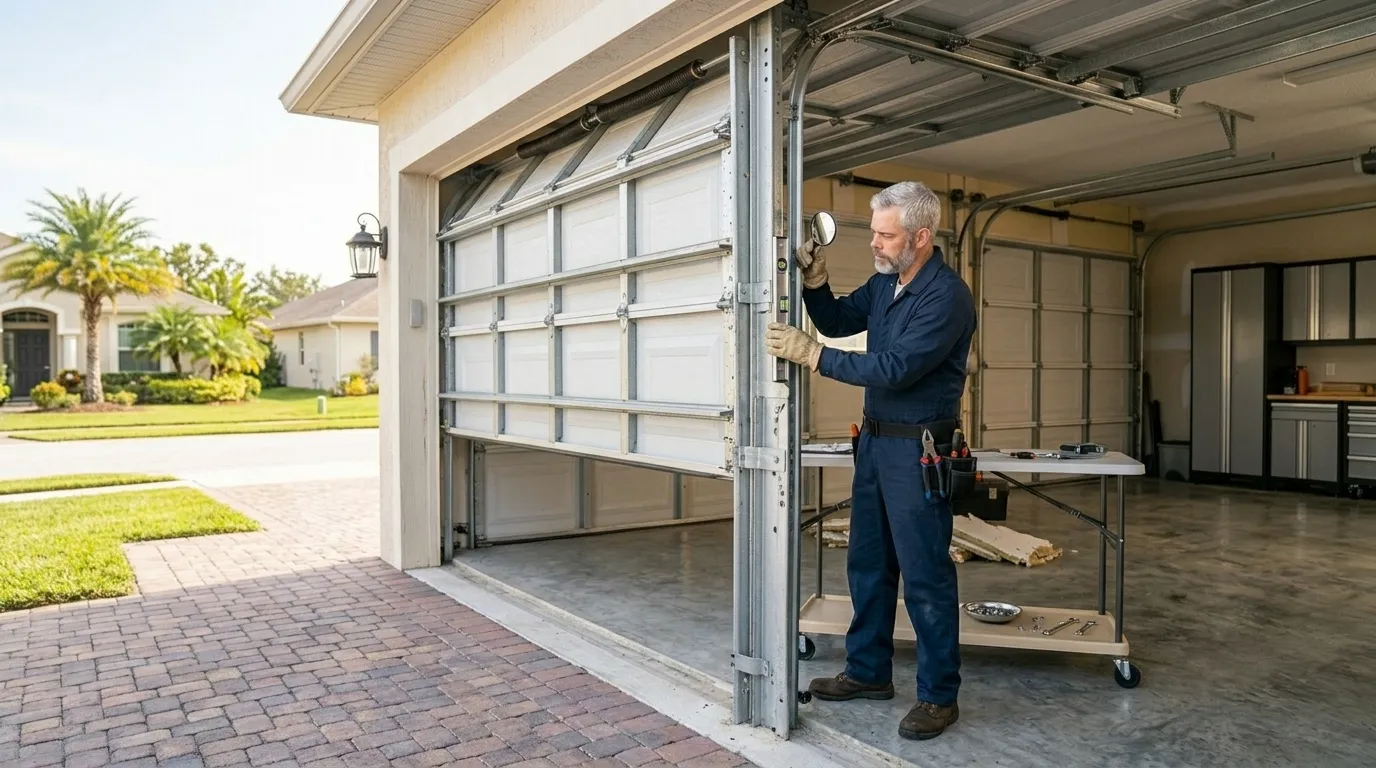
Serving Alhambra's 1960-era housing stock from our Pasadena base, 5 miles out - torsion springs, worn rollers, and openers matched to houses built the same year the neighborhood filled in.
Alhambra's housing stock centers on 1960 - a single year off the broader service area's median of 1959, which tells you this city filled in fast during the same postwar wave that shaped the rest of the San Gabriel Valley. That means a heavy concentration of original steel doors on torsion hardware sized for the lighter panels of that era, not the insulated sandwich doors that came decades later. A house built the same year as its neighbor three streets over usually has the same door problems, just on a different week. With 30,092 households in the city, that's a lot of nearly identical setups still running on 60-plus-year-old track brackets and jamb hardware that nobody manufactures to the original spec anymore.
We travel to Alhambra from our base in Pasadena, about 5 miles away. We don't keep a depot in the city, so what you get is a truck stocked for the kind of door this area actually has, not a generic parts kit.
The Usual Work Here
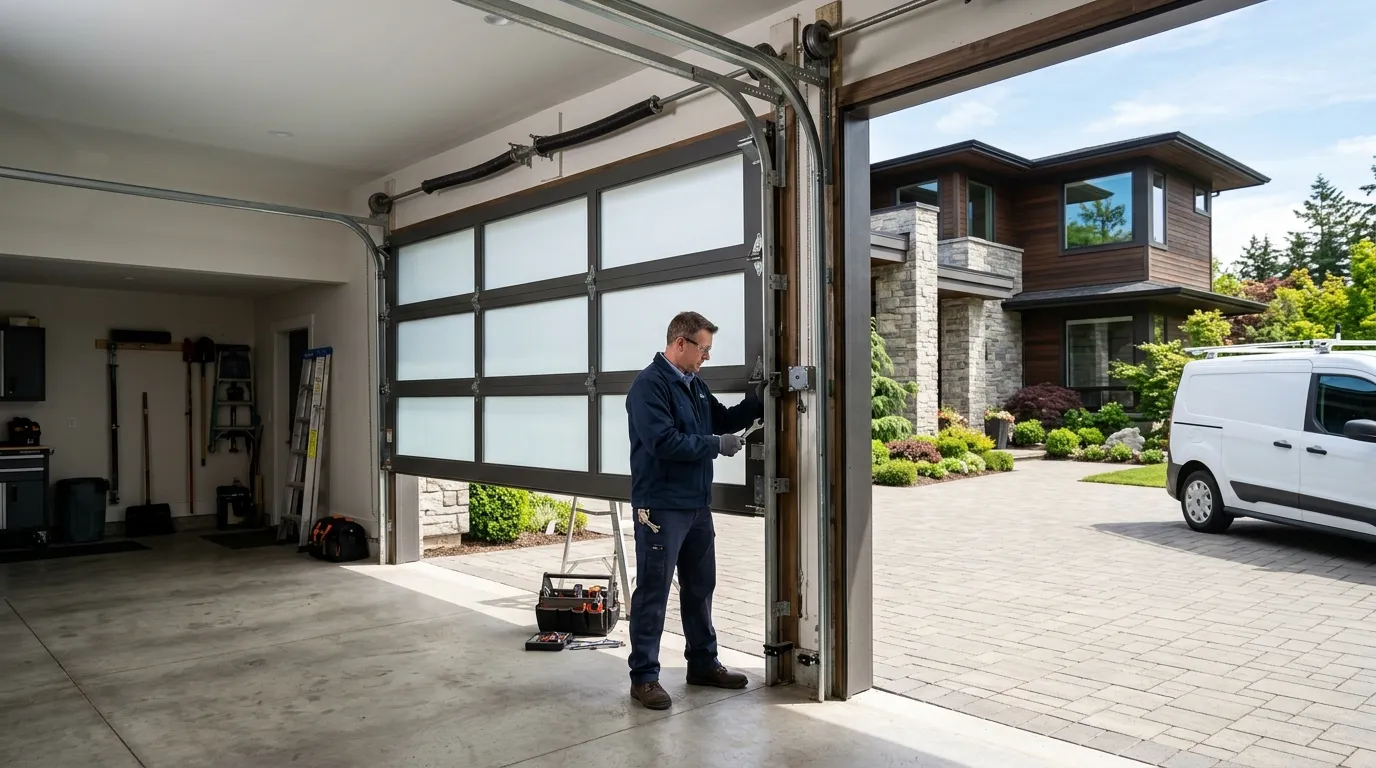
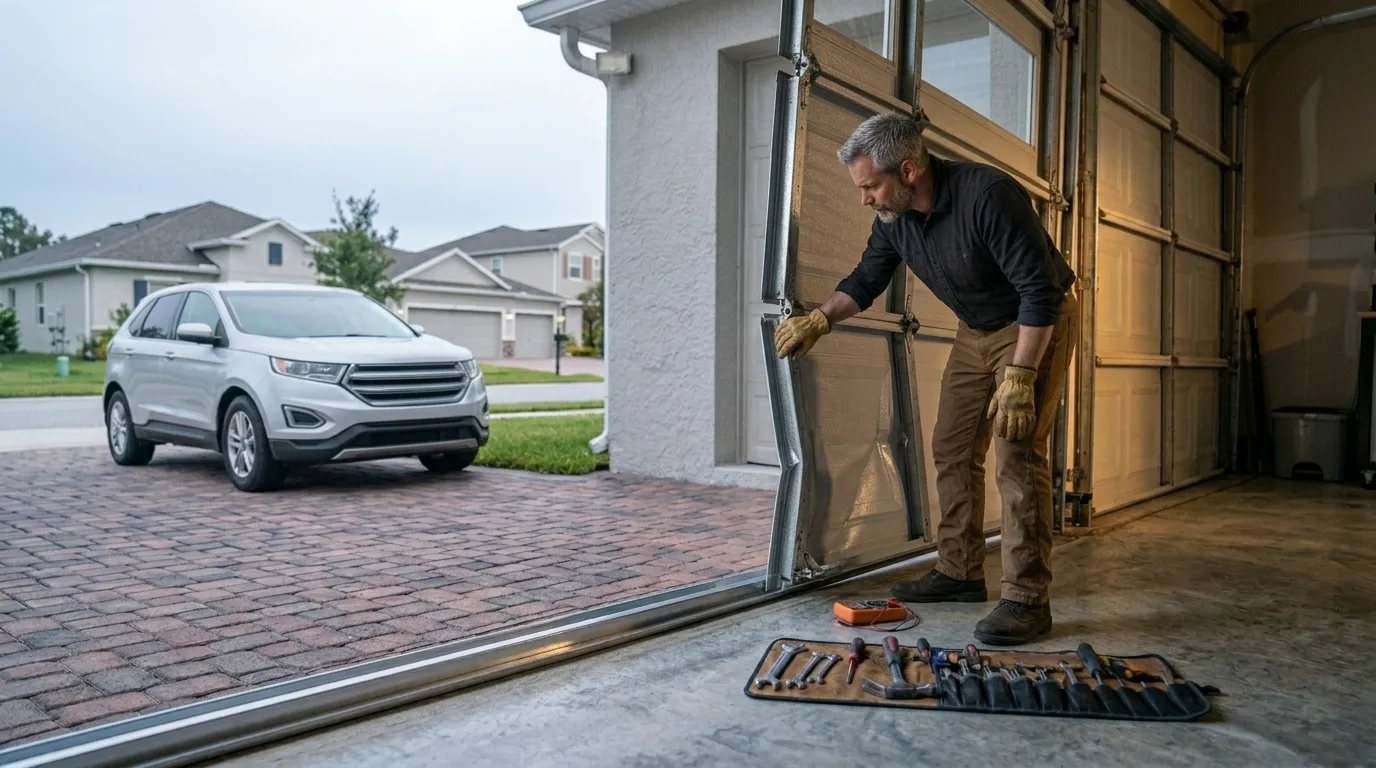
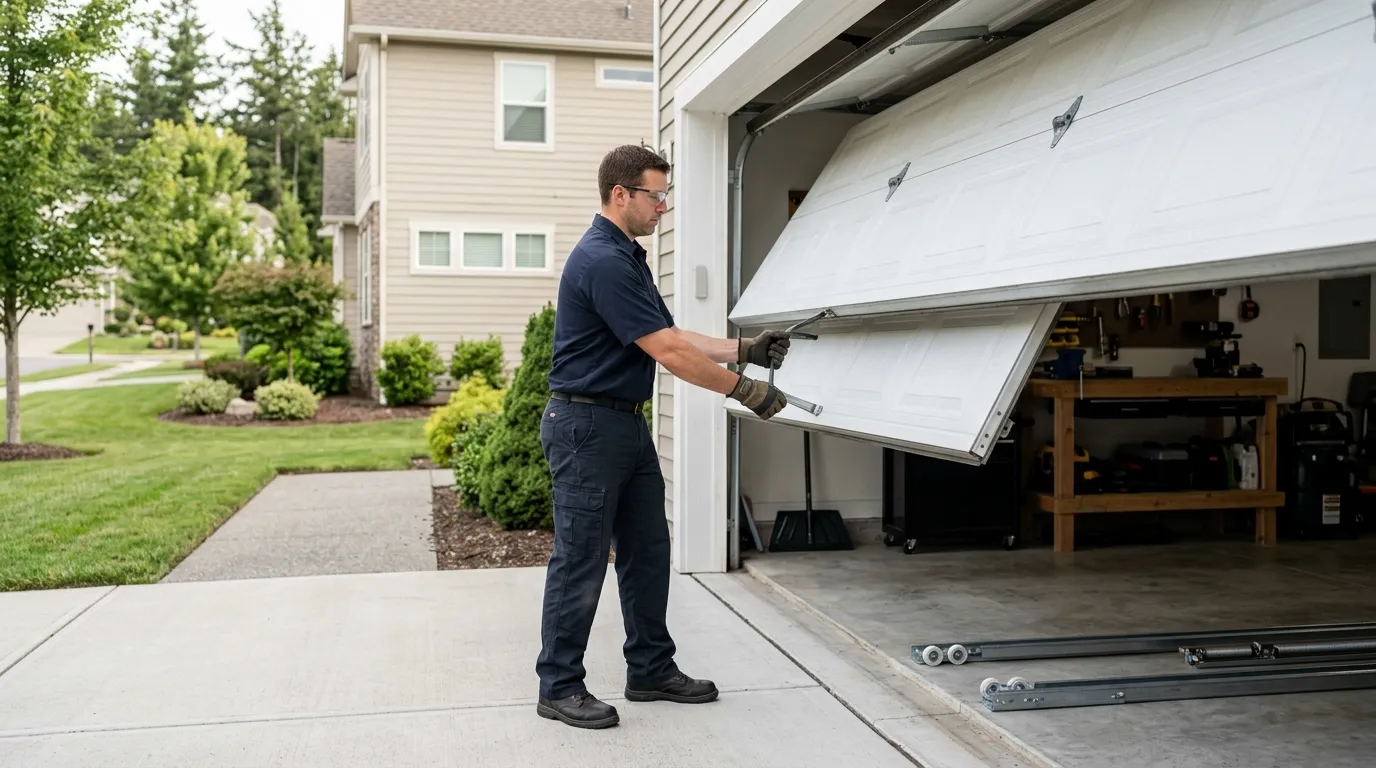
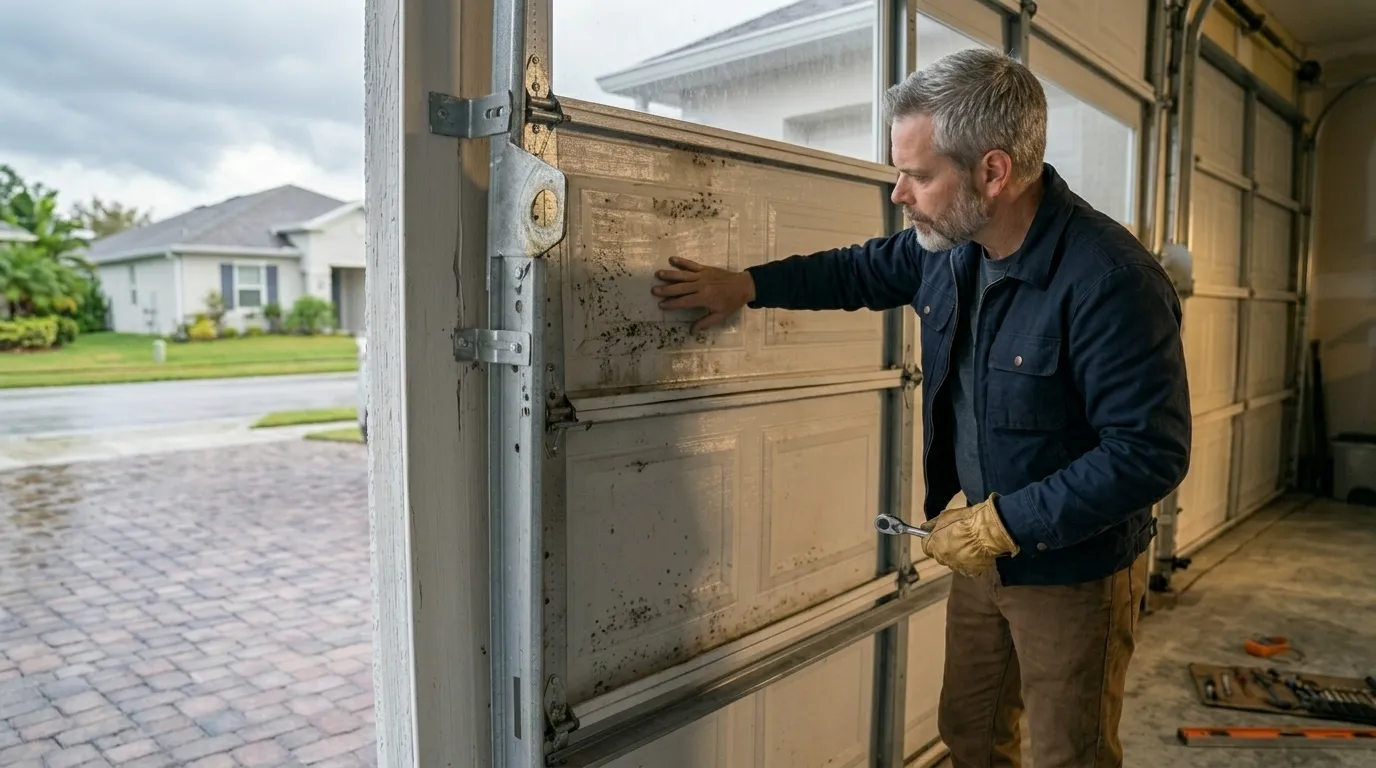
On a 1960-built door, the failure points are predictable: torsion springs that have cycled tens of thousands of times past their rated life, rollers worn oval instead of round, and center hinges that have loosened the track alignment just enough to make the door bind on the way up. Openers get replaced more often than doors around here - the door itself, if it's steel and hasn't been dented, can often keep going with new hardware.
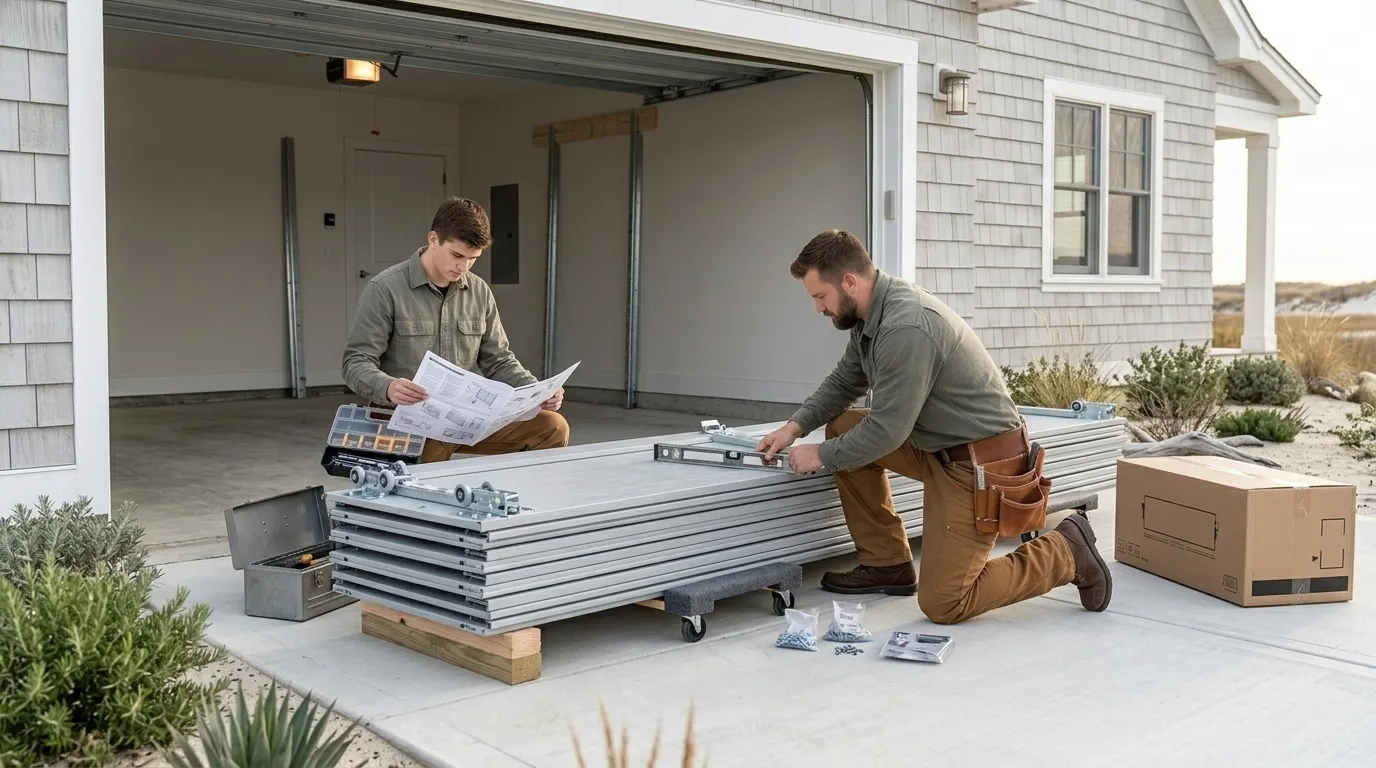
We also see a fair number of double doors that were converted to two singles at some point, or vice versa, which changes the spring calculation entirely from what the original builder spec'd. That's a job we check by hand, not by year of the house, because a mismatch here means a spring that's either underpowered or dangerously overpowered for the panel weight.
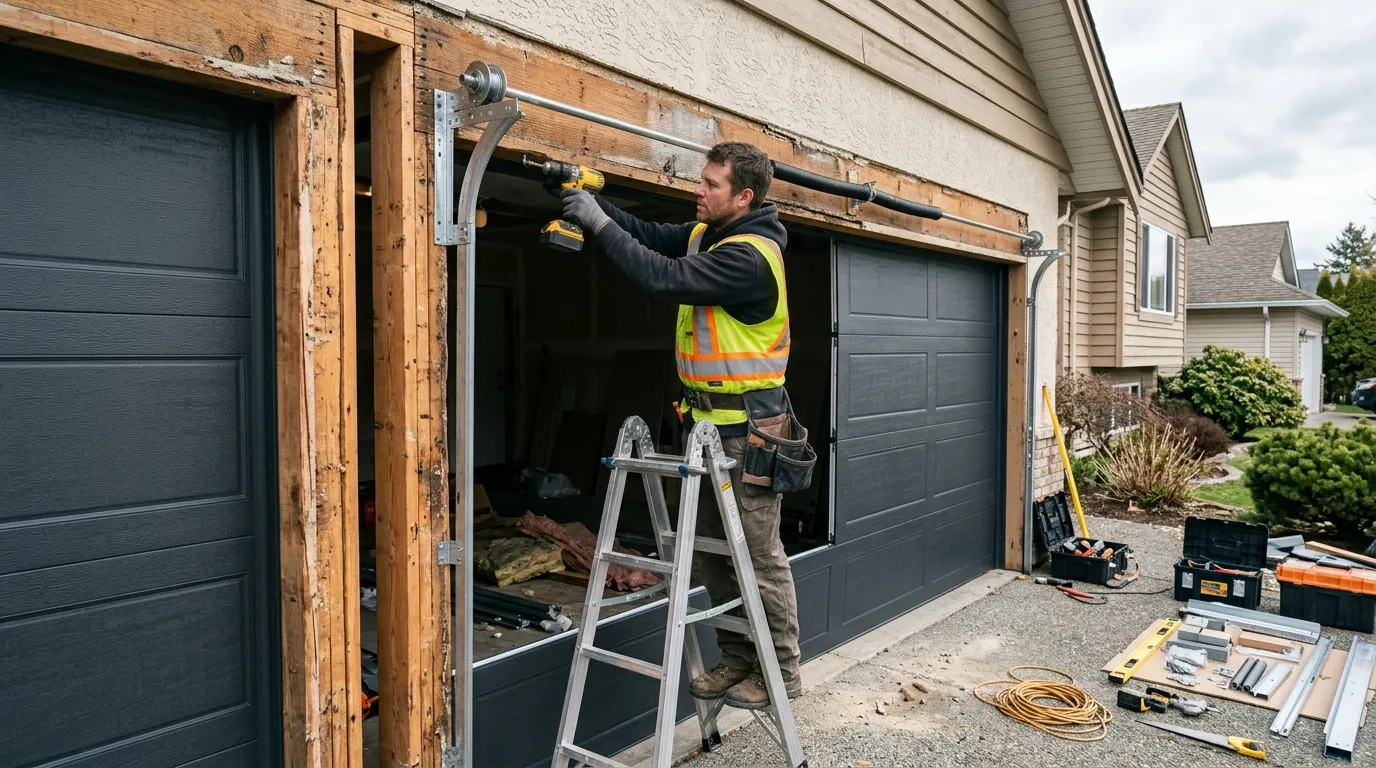
One limitation worth naming: if the track has been reframed more than once, we may not be able to true it up without replacing the jamb hardware, and that's carpentry work outside what we do on a door call.
Timing on This Area
Alhambra sits in the same mild temperate band as the rest of the service area, so you're not dealing with freeze-thaw cycles that crack seals or extreme heat that warps steel panels the way you'd see in other climates. That's a point in favor of an aging door here - the hardware fails from cycle count and age, not from weather stress, which usually means a repair rather than a full replacement is on the table longer than it would be somewhere with harsher seasons.
Median household income in Alhambra runs $85,189, below the broader service area's $94,792. That gap shows up in the calls we get: more requests to repair a spring or replace a section of track rather than swap the whole door, and more interest in getting a straight answer on whether a fix is worth it before committing to a new opener. We give that answer honestly, even when it means telling you the $200 repair beats the $1,800 replacement.
How That Shows Up in the Door
Put it together and the typical Alhambra call looks like this: a door original or close to original to a 1960 build, steel panel still sound, torsion spring gone or going, rollers rattling in a track that's slightly out of true from six decades of use. The fix is usually a spring swap and roller replacement, sometimes with a track adjustment, and the opener gets a look because a struggling spring puts extra strain on the motor.
What we don't see much of here: warped panels from heat, which is common in climates with real summer extremes, or rust-through from repeated freeze cycles. The mild band this area sits in means the doors fail from age and use, not from weather beating on them, and that's the difference that actually matters when you're deciding whether to fix what you have.
How it works
From “it’s stuck” to “it’s fixed”
01
Tell us what’s wrong
Describe the symptom - won’t open, loud bang, opener runs but the door won’t move.
02
On-site diagnosis
A technician tests the door under power and by hand and finds what actually failed.
03
Clear, up-front plan
You get the fix that’s needed and what drives the cost - before any work starts.
04
Repaired & tested
The repair is done, the door is set true and tested, and the work area left clean.
Serving Pasadena, CA - tell us what your door’s doing and we’ll take it from there.
Straight answers about garage door repair in Pasadena. Still unsure? Ask us directly.
Is my garage door original to my house if it was built around 1960?
It's possible, especially if it's steel and hasn't been dented or replaced. A lot of Alhambra houses from that era still have original panels on newer hardware, since the panel itself tends to outlast the springs, rollers, and openers underneath it. We can tell you on-site whether what you have is worth keeping.
Do you have a shop in Alhambra?
No. We're based in Pasadena, about 5 miles away, and we travel out to Alhambra for calls. We don't advertise a local depot or a guaranteed response window here because we don't operate one out of the city.
Why do older torsion springs fail more in this area?
Springs are rated for a number of open-close cycles, not years, and a lot of Alhambra's doors installed around 1960 are well past that count. Because the climate here is mild rather than extreme, the failure is almost always cycle fatigue rather than weather damage - which usually means a straightforward spring swap does the job.