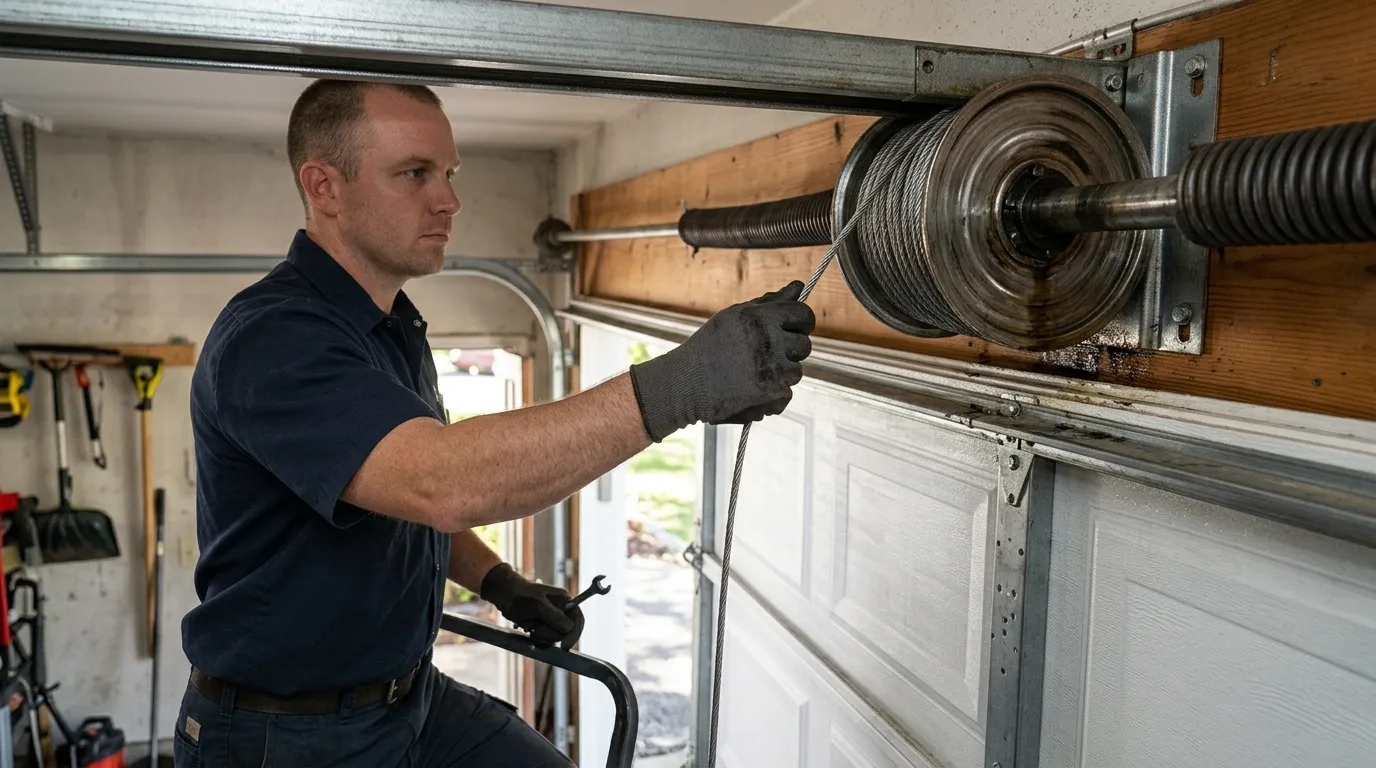
Housing across this service area was built mostly between 1943 and 1959, with a citywide median build year of 1959. That matters more than most homeowners realize. A door installed in a house from that era was almost certainly replaced at least once since, but the track spacing, header clearance, and spring mounting on those older garages often still follow the original layout. When we get a call on a door in one of the 65 named areas we cover, odds are decent the opener or torsion hardware doesn't match what's on the truck, because it was sized for a stud pattern and jamb depth that current doors don't use.
Pasadena also sits in a mild temperate climate band, which is a small mercy here. We're not fighting the rust-through and wood rot that wreck doors in wetter or harsher climates in ten years flat. Panels here tend to fail from age, use, and impact - a spring that's cycled its limit, a track that's been walked into by a car bumper, rollers worn oval - not from weather eating the steel. That changes when repair stops making sense: it's less about corrosion and more about whether the parts still exist for what you've got.