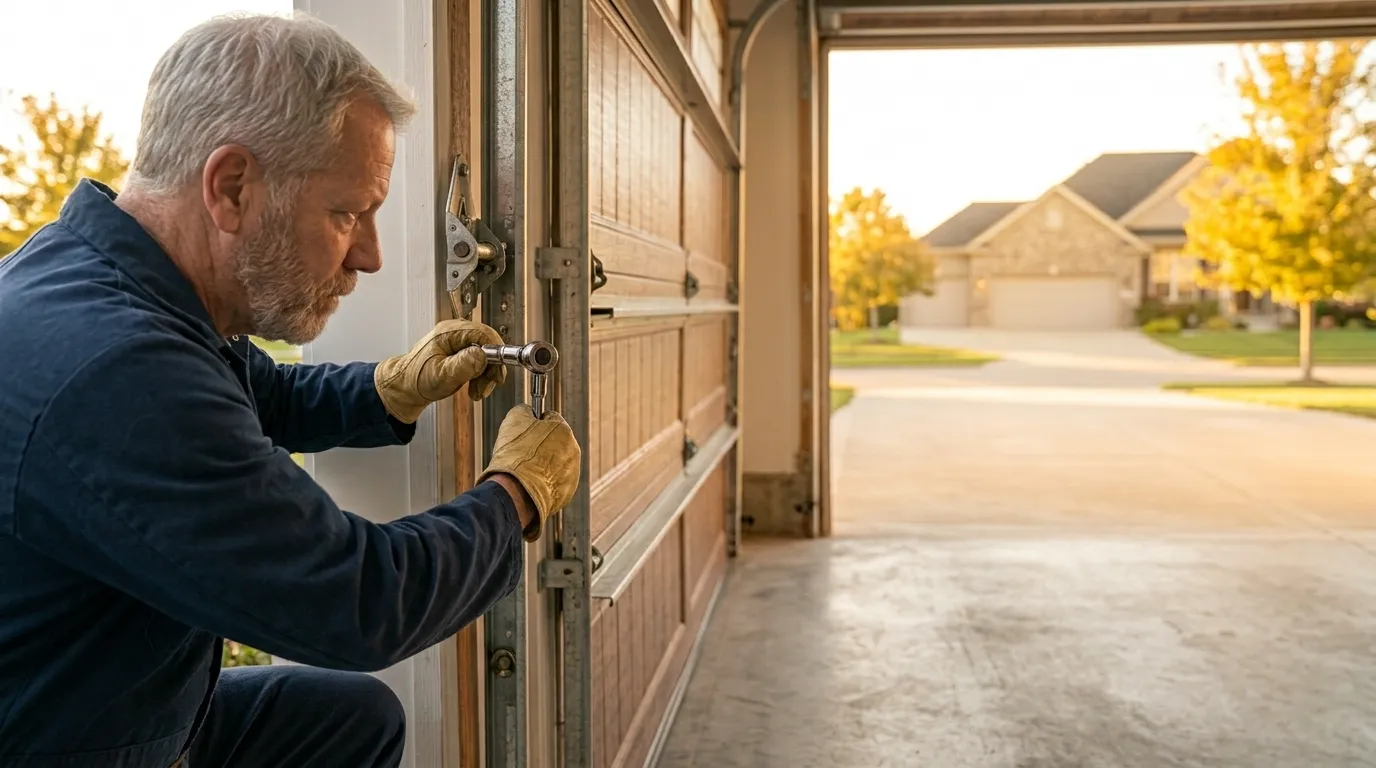
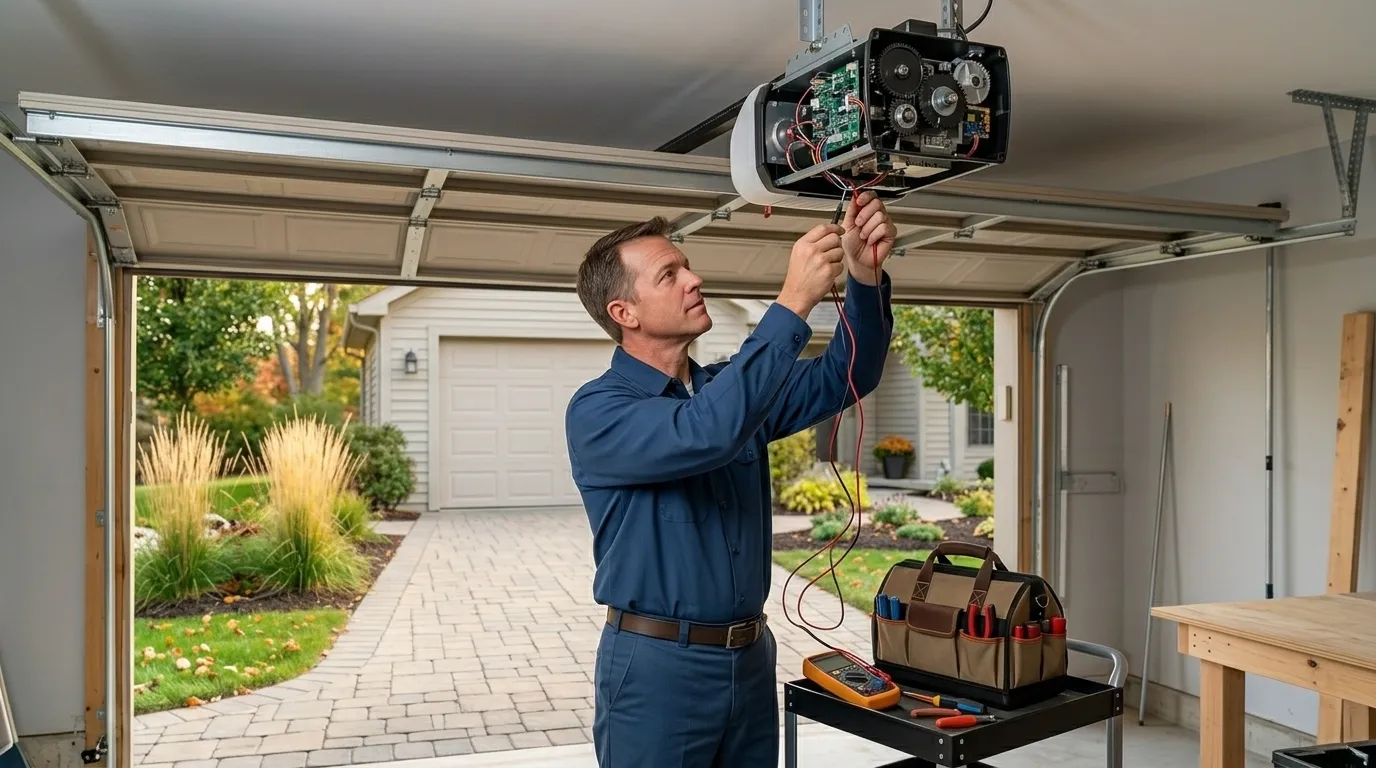
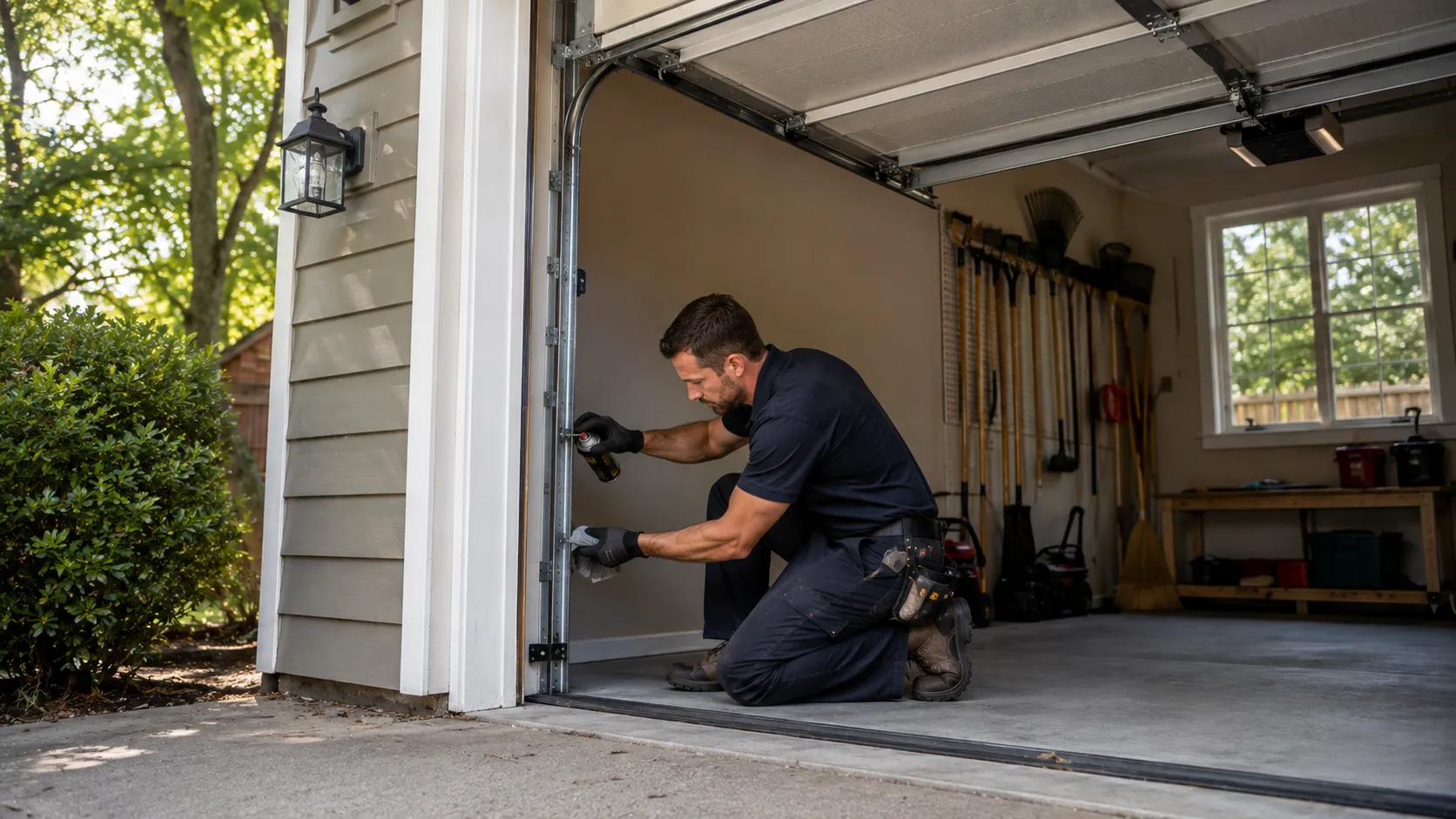
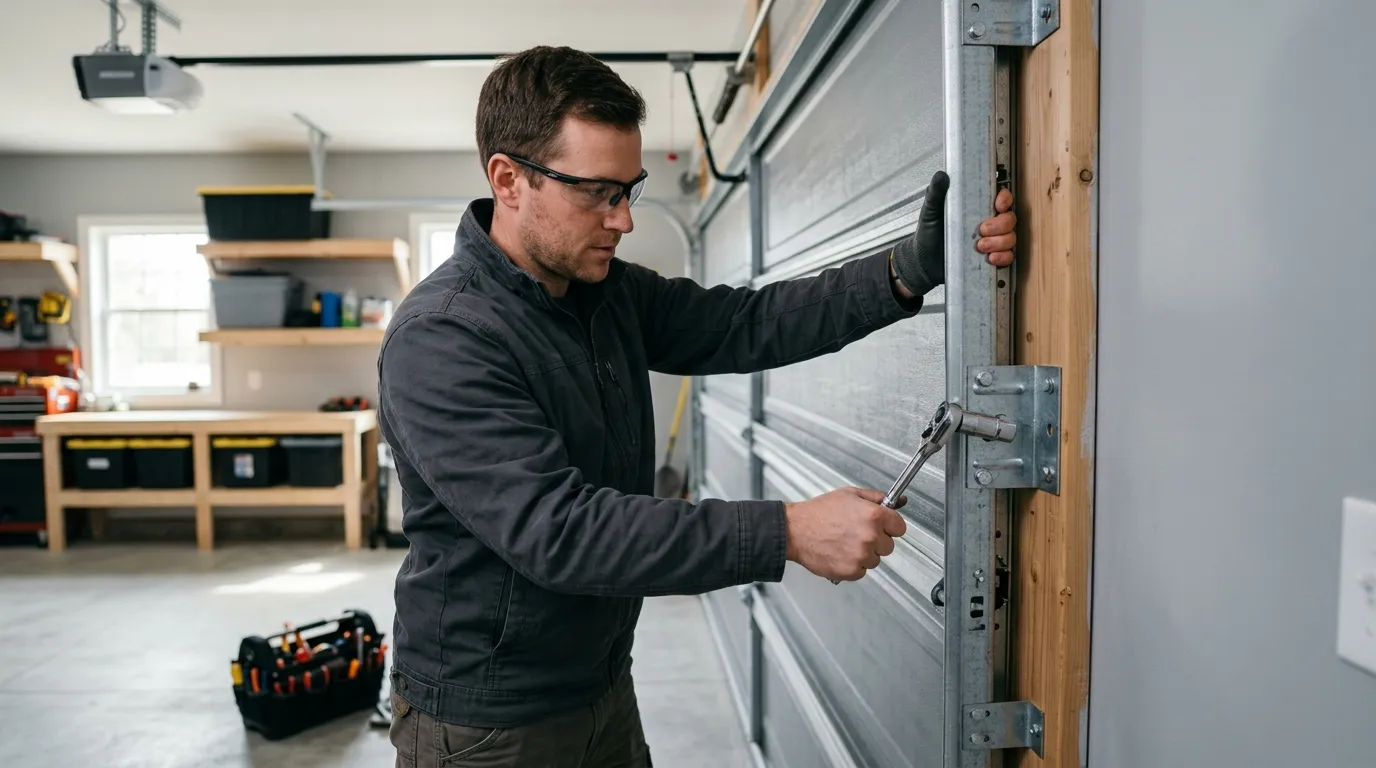
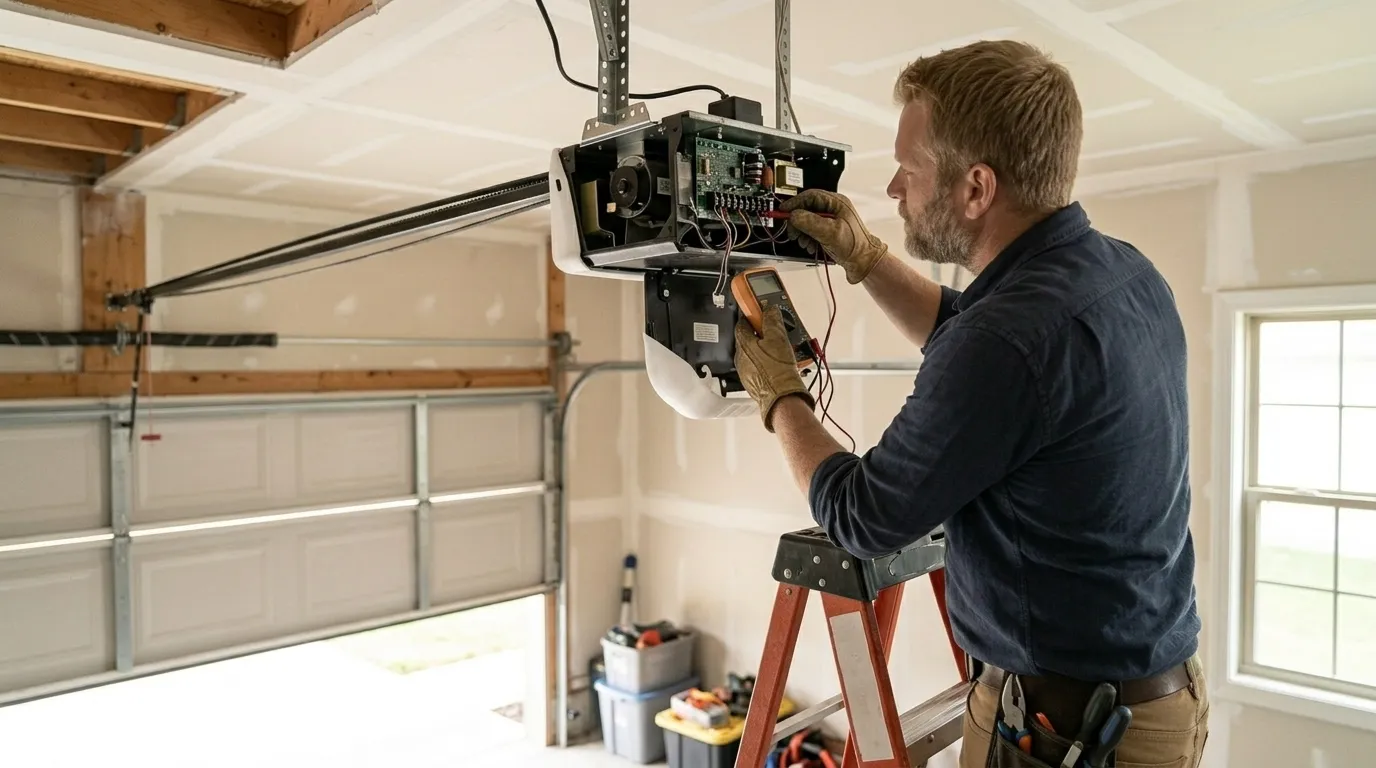
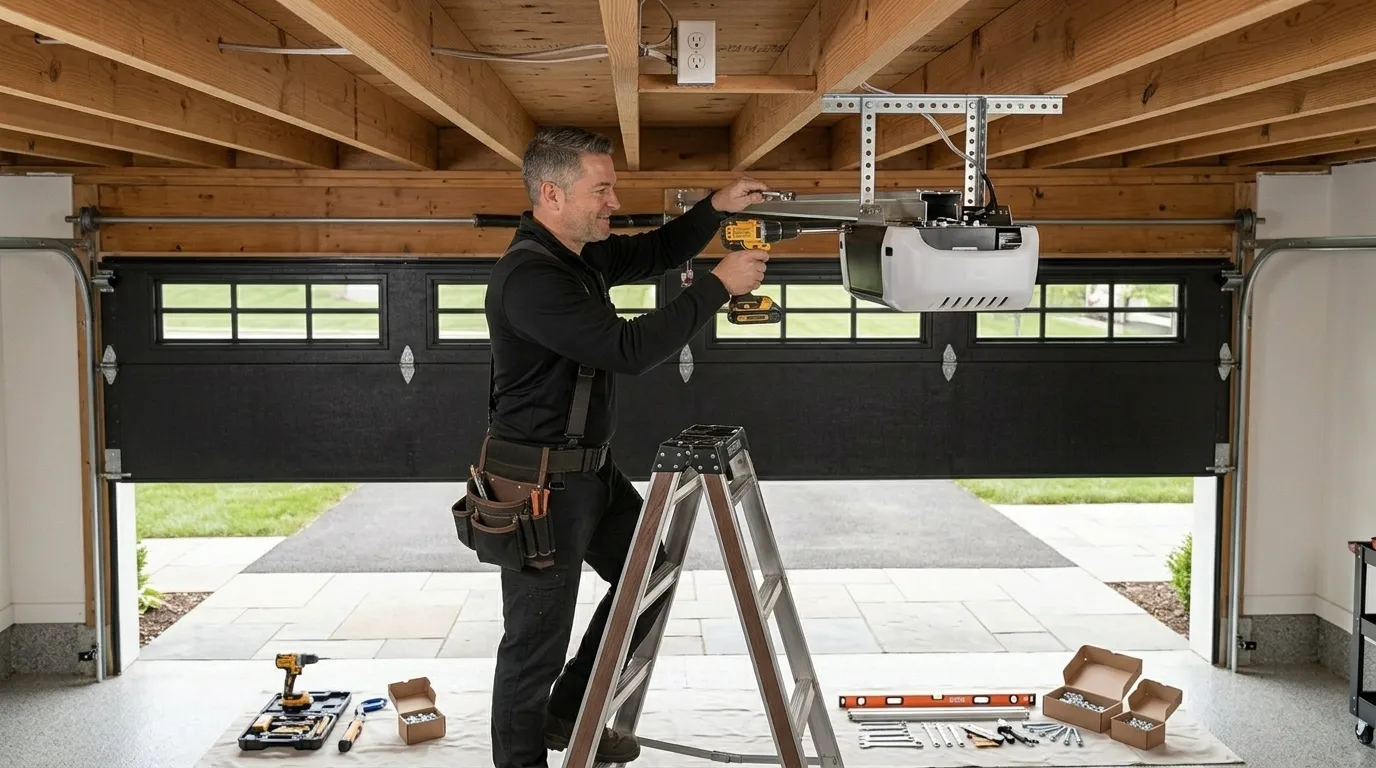
Before you call anyone, listen for where the sound happens in the door's travel, not just that it's happening. A noise only near the top, right before the door seats, often means the up-travel limit or the top roller and bracket - common on older track systems. A noise through the whole cycle, especially a grinding or scraping, usually means a roller or bearing is worn out, which is typical wear on hardware that's been in service since a 1950s or 60s build.
Check the springs visually, without touching them - a gap in the coil means a broken torsion spring, and that's not a DIY fix on any door, any era. Check whether the noise changes with temperature or time of day. On the mild climate here, if a noise changes noticeably morning to afternoon, it's more likely a lubrication issue than a structural one, since we don't get the extreme swings that cause metal to visibly contract.
One limitation worth saying plainly: if your door is running original 1950s or 60s hardware and multiple parts are showing wear at once, patching the noisy part often just moves the noise somewhere else within a year. At that point a full hardware replacement is usually the better use of money than another repair call.