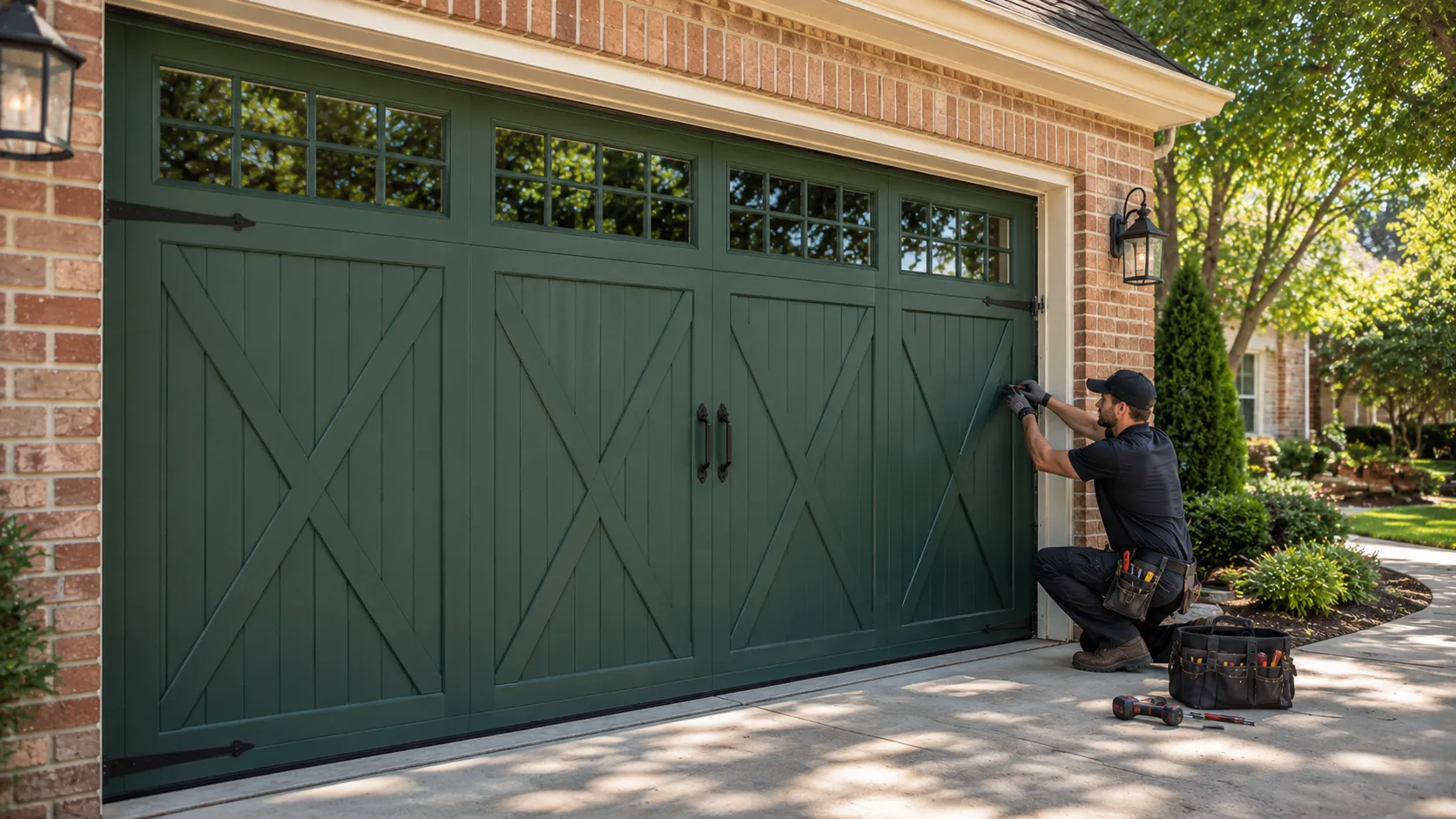
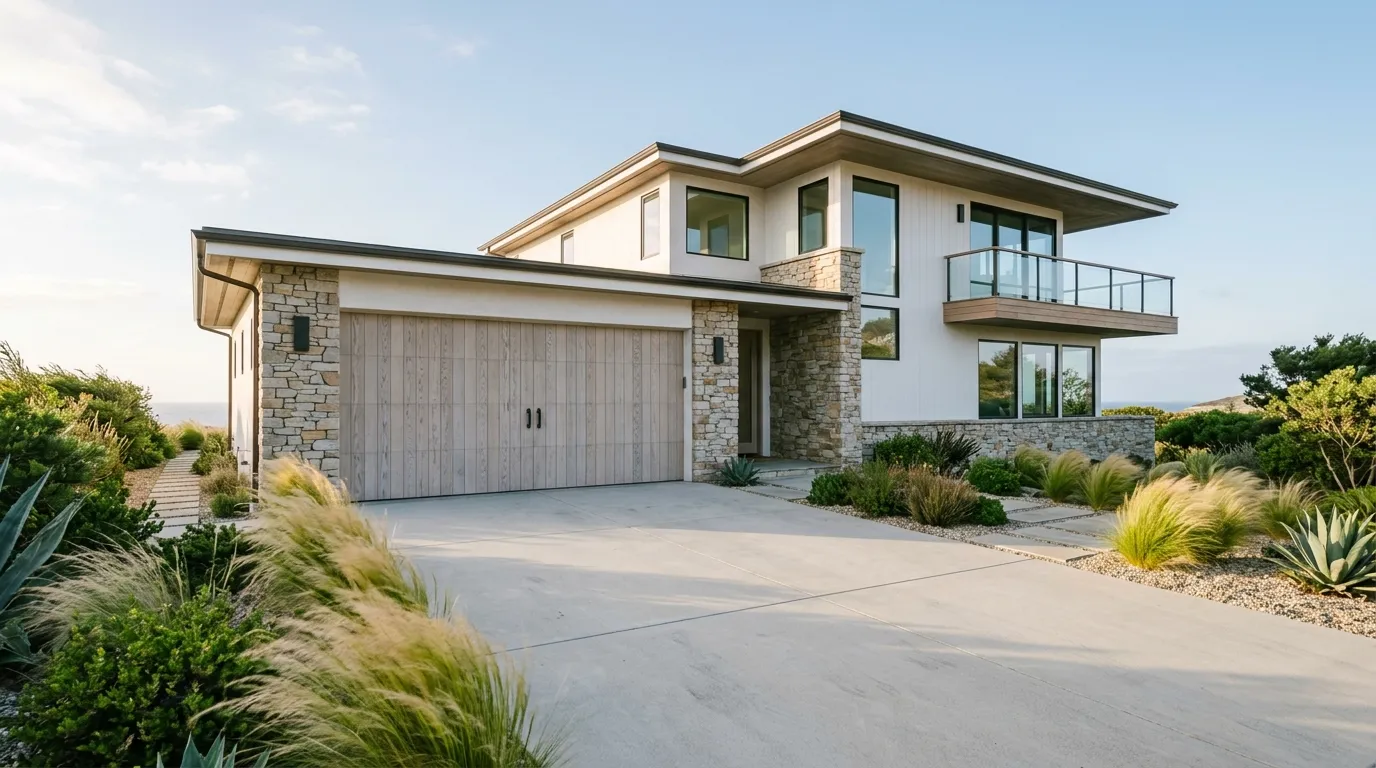
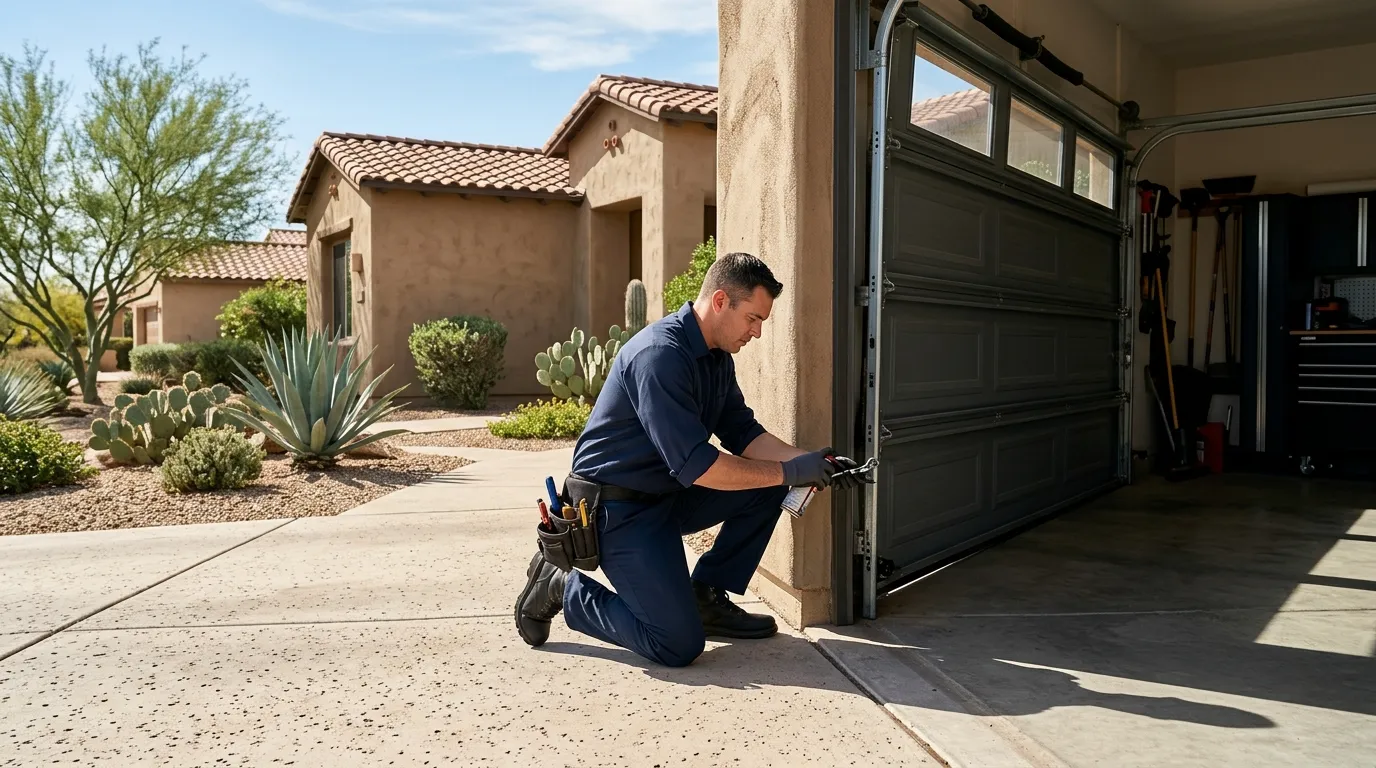
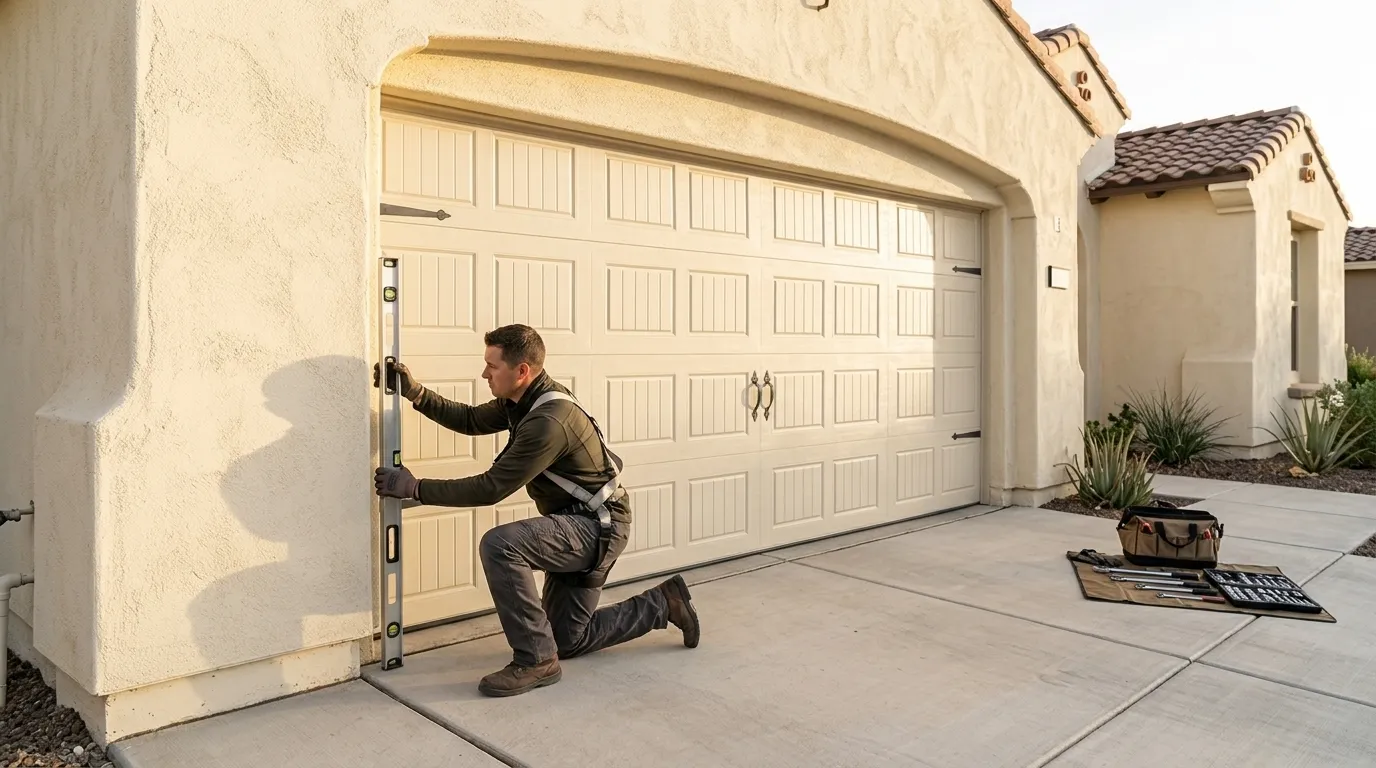
Garage door repair and install for Monrovia, built out mostly in the early 1960s. We travel from Pasadena for spring, opener, and panel work on this housing stock.
Monrovia's housing stock centers on 1962, a few years past the broader service area's median of 1959. That gap matters more than it sounds. Doors and openers installed during the early-to-mid 1960s building wave in this part of the San Gabriel Valley came out of a slightly later hardware generation than the immediate postwar tract houses closer to the Pasadena core. You still get plenty of the same original steel sectional doors and side-mounted torsion springs, but garages here were more often built with a bit more headroom and a wider range of opener brackets, since manufacturers were shifting designs through that decade. With 14,019 households in Monrovia, there's a real mix: original hardware that's now over sixty years old sitting next to openers and doors that got swapped out during a remodel wave sometime in the last twenty or thirty years. We don't guess at what's behind a given door until we're standing in front of it, but knowing the build era tells us what to bring on the truck before we leave Pasadena.
The Usual Work Here
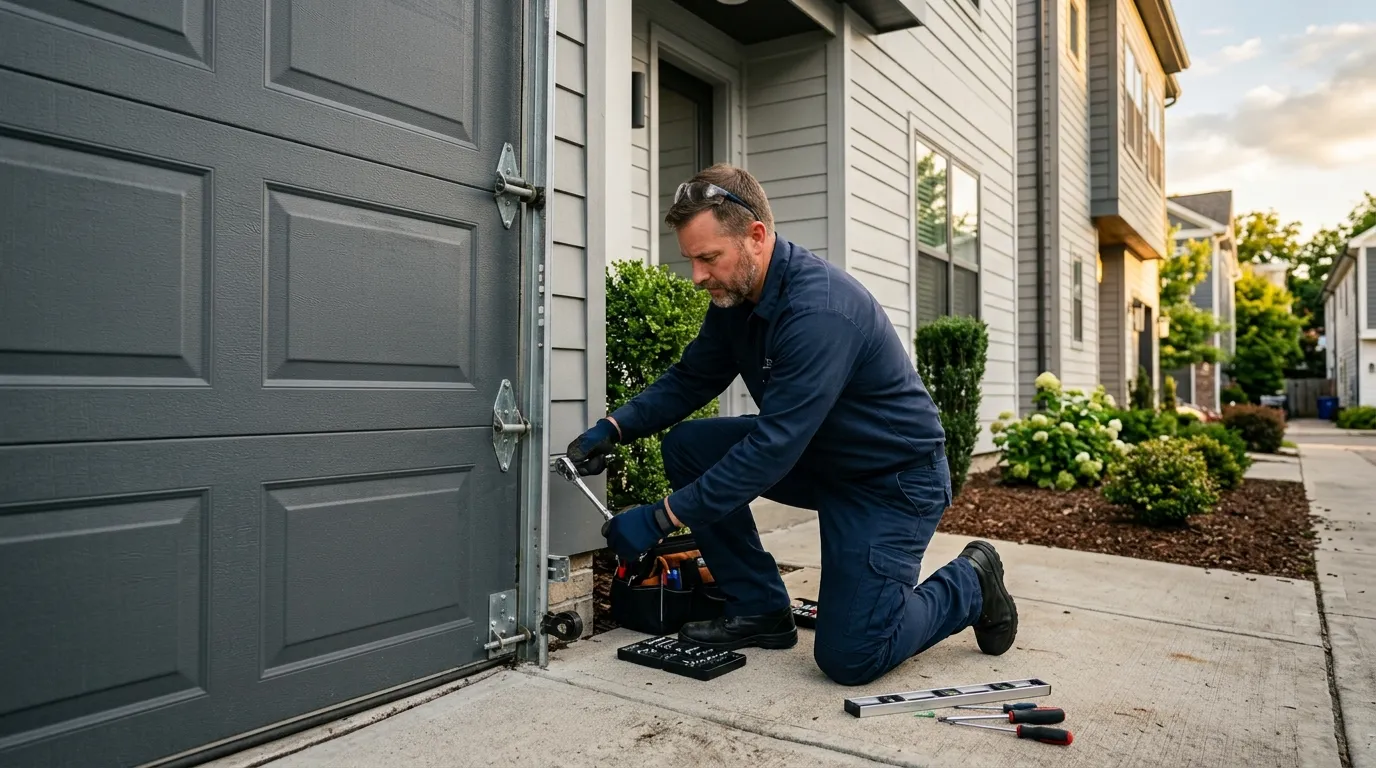
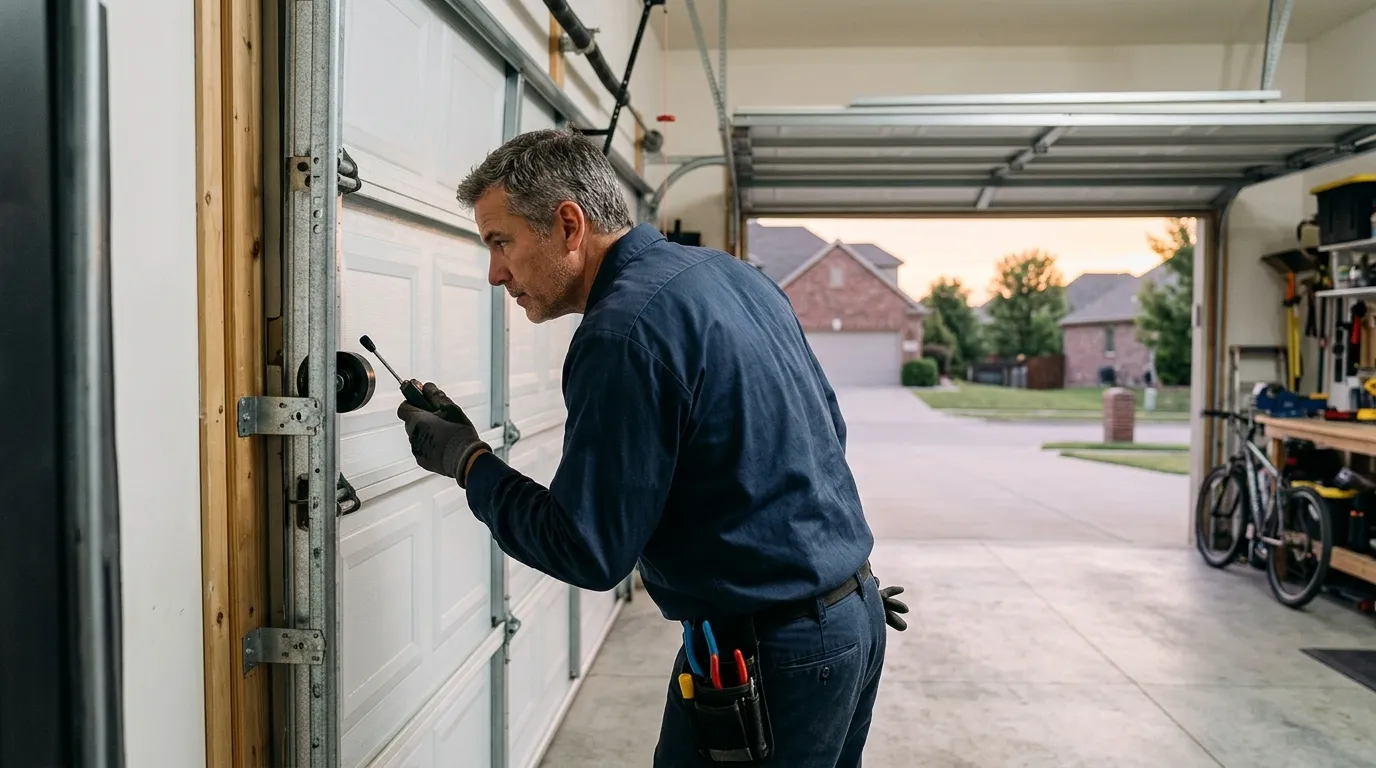
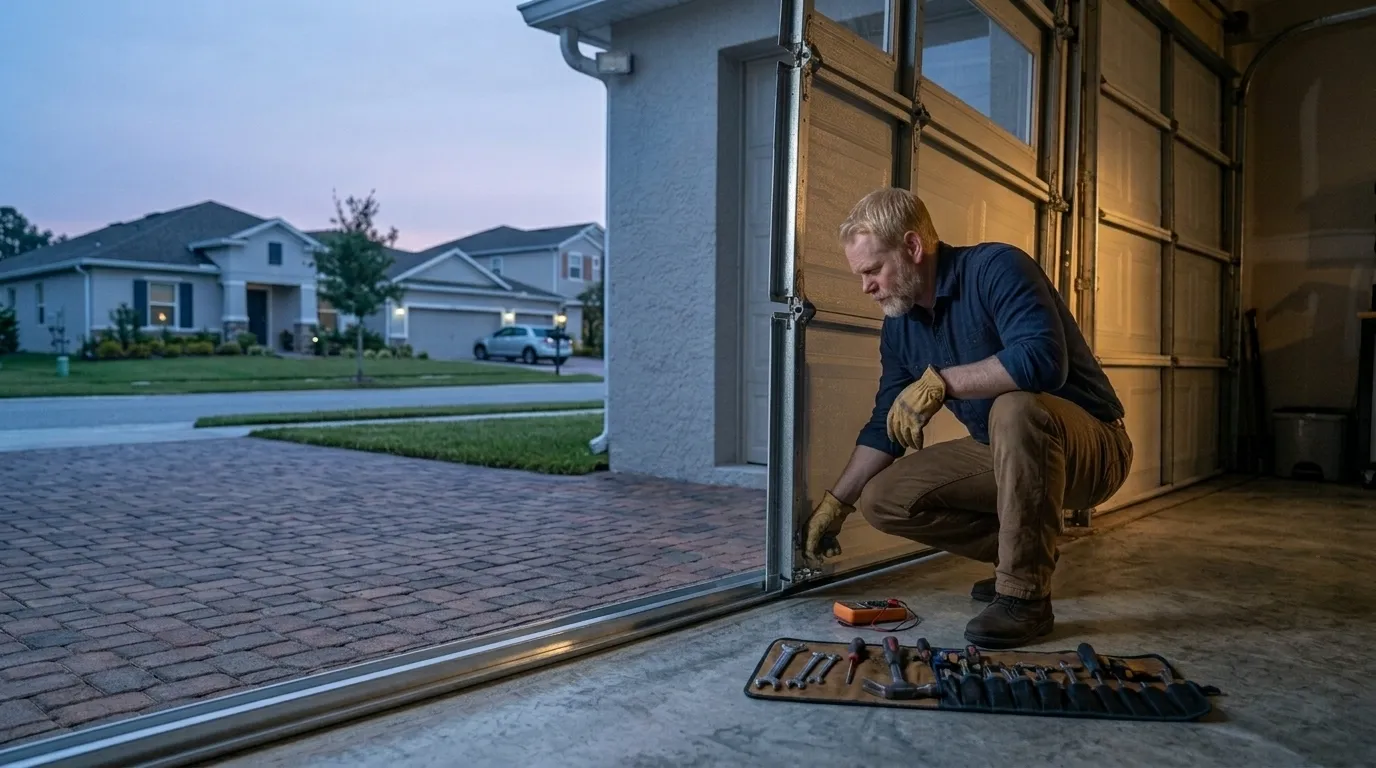
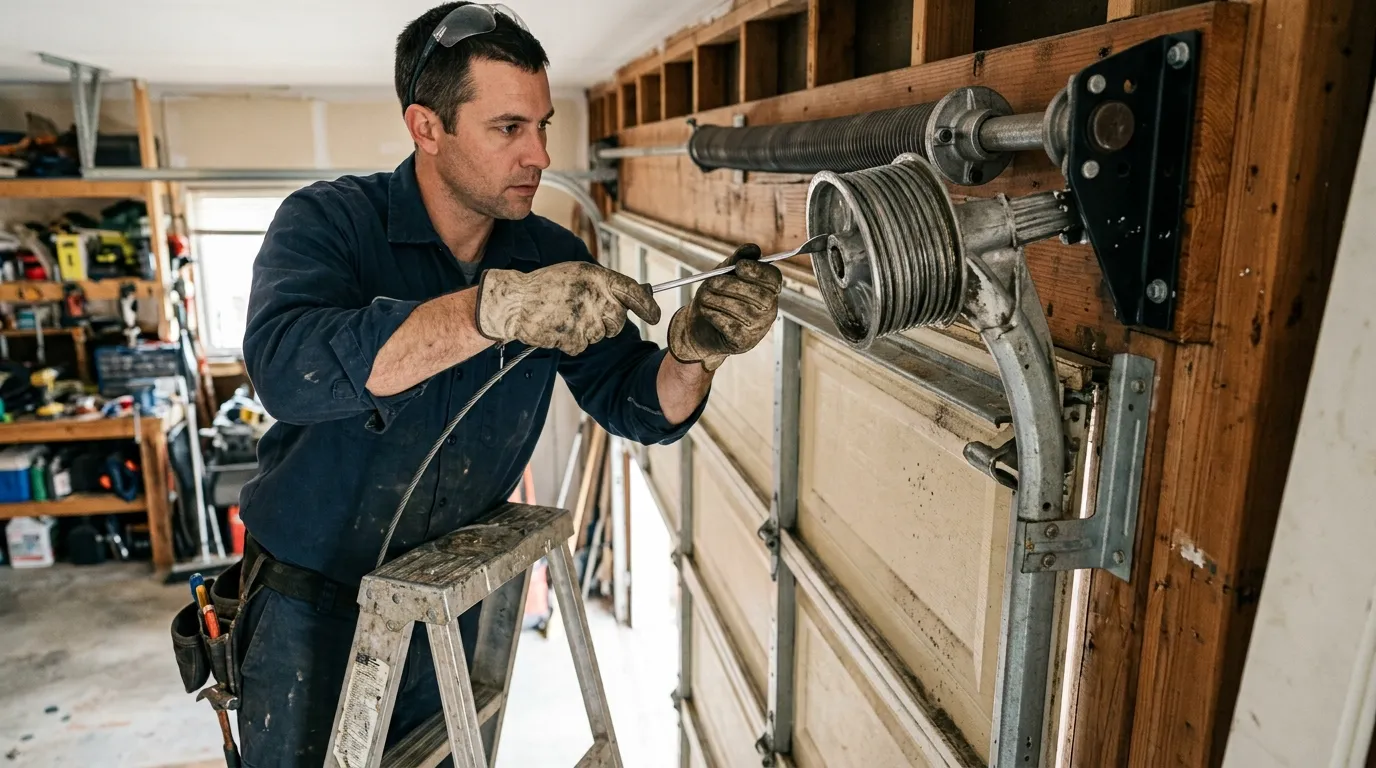
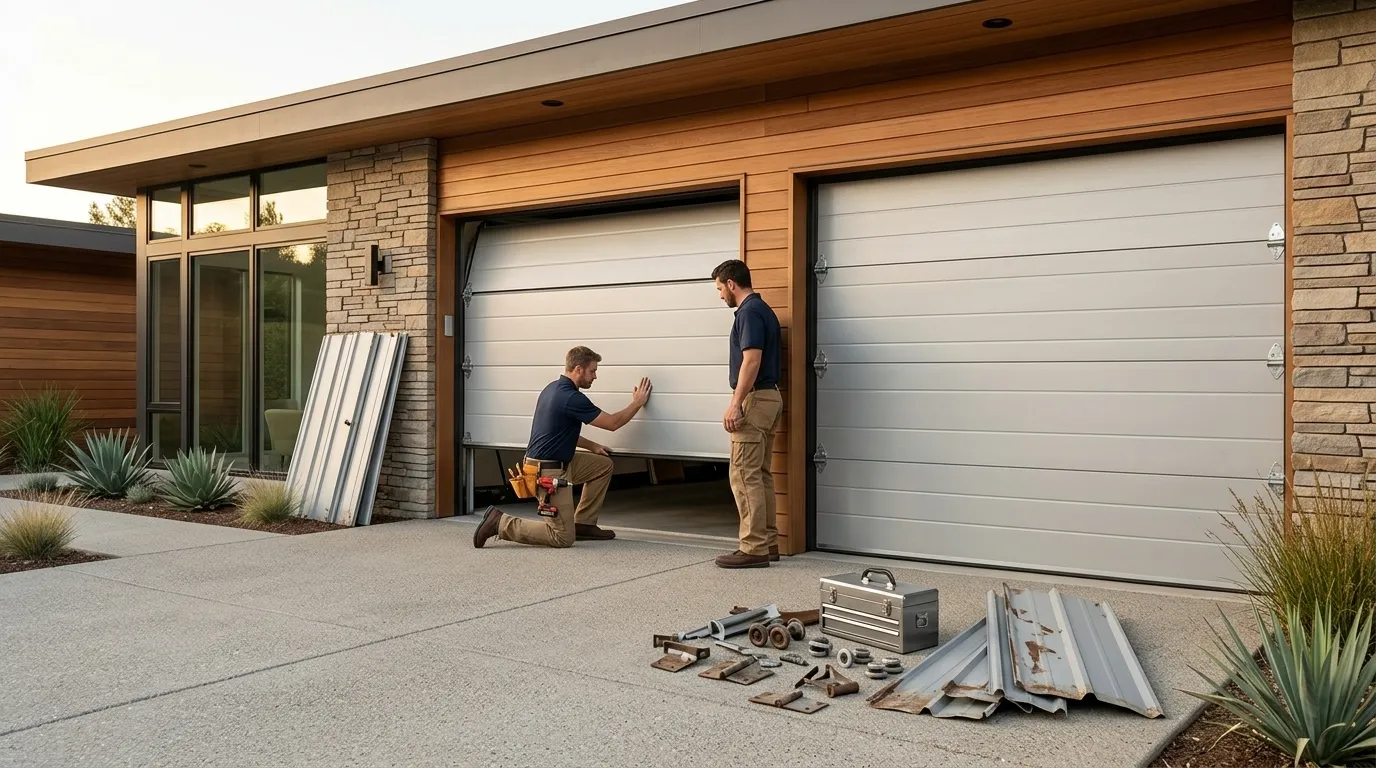
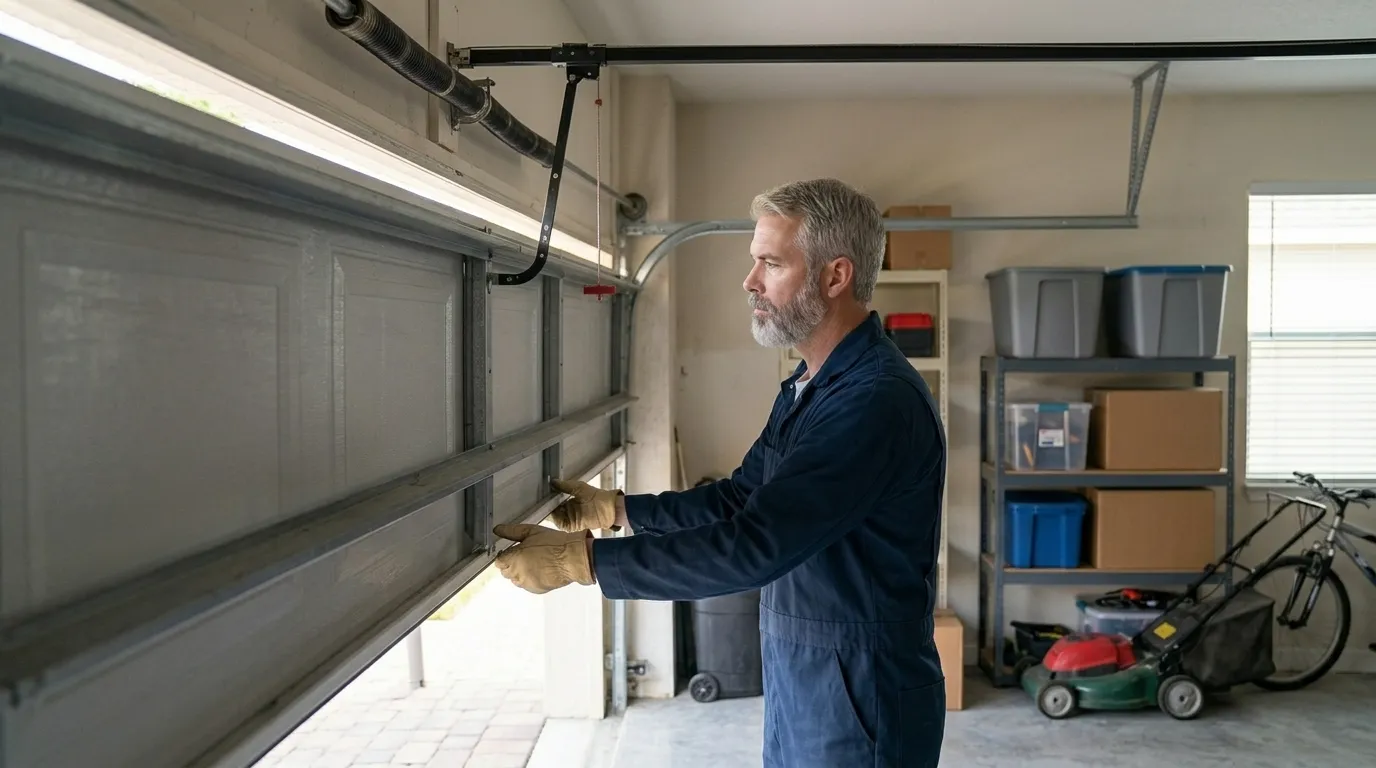
On doors from the early 1960s stock, the most common call is a torsion spring that's finally given out after decades of cycles, usually on a single-car door where the spring was undersized to begin with. Second most common: rollers and hinges worn enough that the door binds in the track, which on these older jambs is often set slightly narrower than what a newer door would want. We also see a fair number of openers that are original or first-generation replacements, meaning the drive mechanism and safety sensors are outdated by current standards even if they still technically run. One honest limitation: if a specific replacement panel or an obsolete opener part isn't something we stock, we're ordering it, and that can push a repair out a few days rather than same-visit. For median household income here around $97,083, most owners we talk to would rather pay for a spring or roller job than replace a door that's structurally sound, and on this stock that's usually the right call.
Timing on This Area
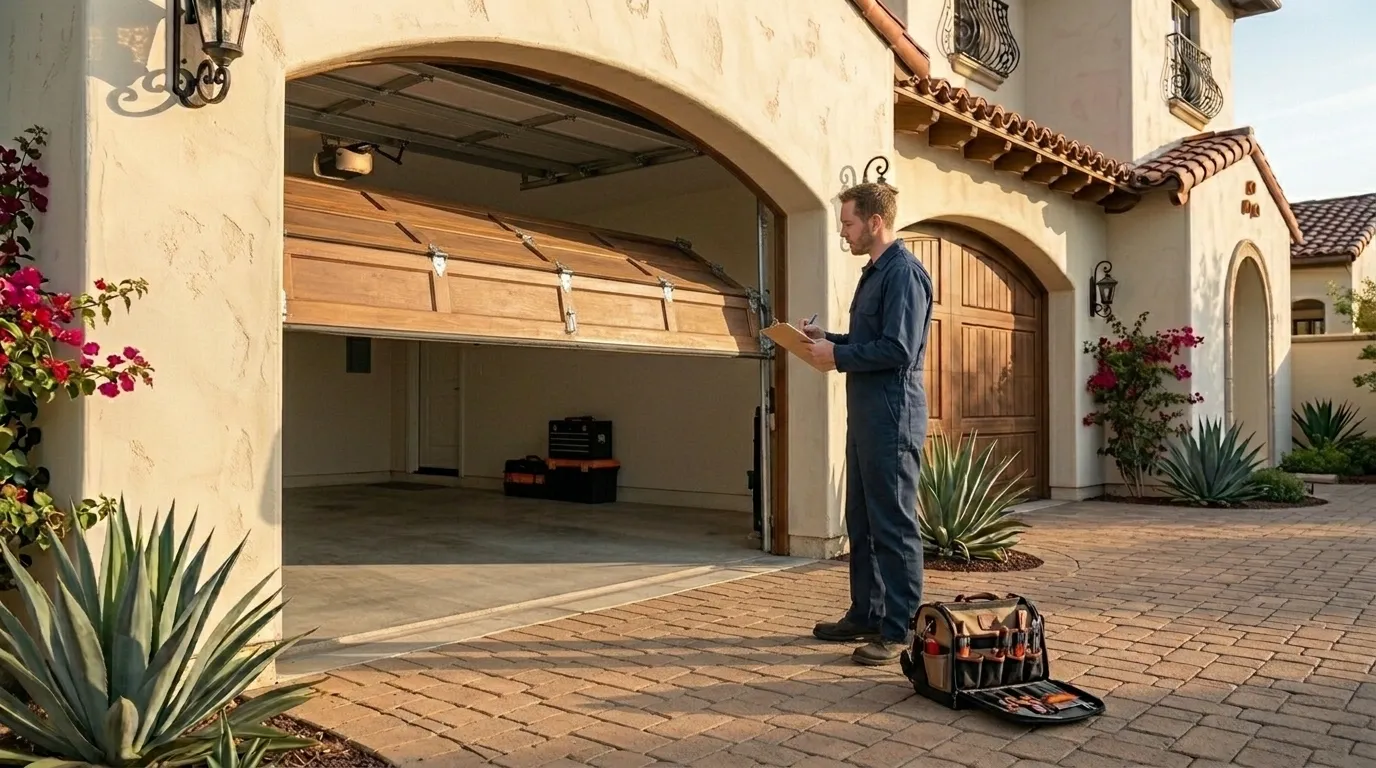
We come out to Monrovia from Pasadena, about 9 miles, so we're not sitting on standby in the neighborhood the way a local depot would be. What that means practically: we schedule the trip, not a walk-up. For non-emergency work - a noisy track, a slow opener, a panel that's dented but the door still runs - that's not a problem, we just plan the visit. For a spring that's snapped and a car trapped inside, we still make the drive, but we're honest that we're not five minutes away. The mild temperate climate here doesn't add the kind of weather-driven urgency you'd get in a place with hard freezes or heavy storm cycles, so most jobs in Monrovia are wear-based rather than emergency-based to begin with, which lines up with a scheduled-trip model better than an on-call one would.
How That Shows Up in the Door
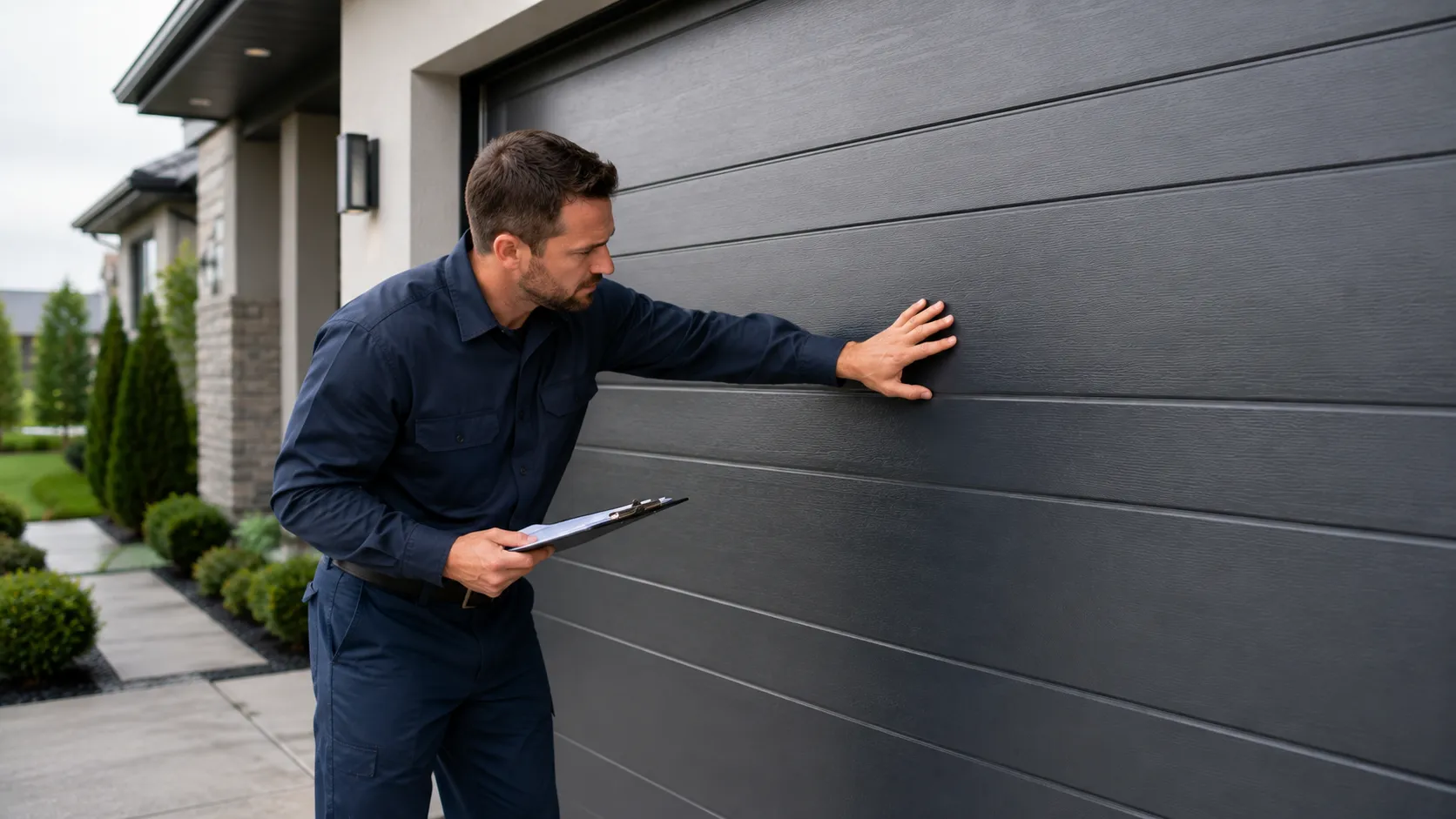
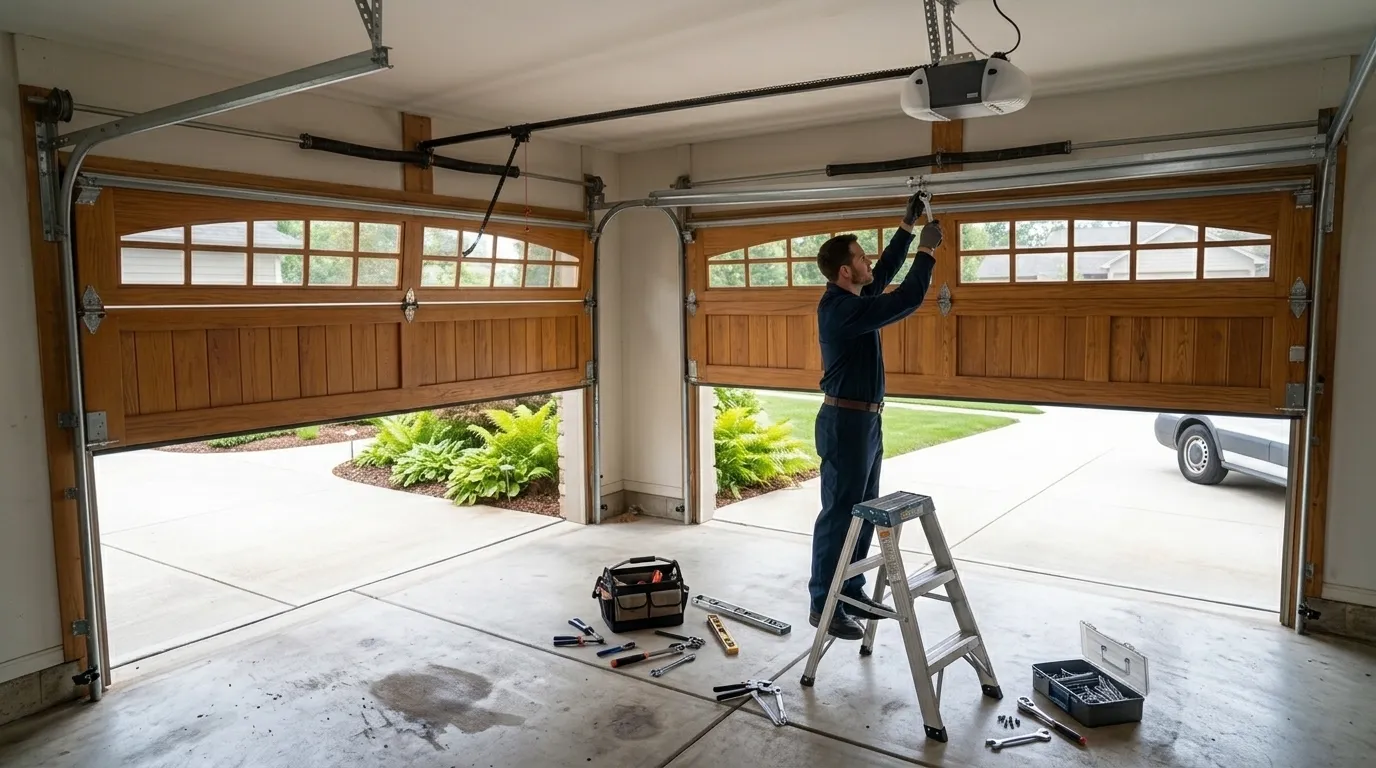
Because Monrovia's build year runs a bit later than the area median, you'll find fewer of the oldest one-piece slab doors and more sectional doors with hardware that's closer to a modern layout, even if the door itself is decades old. That's actually good news for repair: parts interchangeability tends to be better on early-1960s sectional hardware than on the true late-1940s stock closer to the core of the service area. The tradeoff is that openers from this era, when original, often use control boards and safety systems well behind current code, so a spring repair sometimes turns into a conversation about whether the opener is worth keeping. We'll tell you straight when replacement makes more sense than another repair, and we won't push a full door swap on a door that's got years left in it just because the opener's dated.
How it works
From “it’s stuck” to “it’s fixed”
01
Tell us what’s wrong
Describe the symptom - won’t open, loud bang, opener runs but the door won’t move.
02
On-site diagnosis
A technician tests the door under power and by hand and finds what actually failed.
03
Clear, up-front plan
You get the fix that’s needed and what drives the cost - before any work starts.
04
Repaired & tested
The repair is done, the door is set true and tested, and the work area left clean.
Serving Pasadena, CA - tell us what your door’s doing and we’ll take it from there.
Straight answers about garage door repair in Pasadena. Still unsure? Ask us directly.
Is Monrovia's garage door stock different from the rest of the Pasadena area?
Yes. Monrovia's median build year is around 1962, a few years later than the roughly 1959 median across the wider service area. That means slightly newer sectional hardware on average, though plenty of original 1960s-era springs and openers are still in service and due for replacement.
Do you have a location in Monrovia?
No, we work out of Pasadena, about 9 miles away. We schedule trips to Monrovia rather than keeping a truck stationed there, so non-emergency work gets booked in and emergency calls still get a scheduled visit, just not an instant one.
Will you replace my whole door if just the spring is broken?
Not if the door is otherwise sound. A broken torsion spring on a door from this era is usually a straightforward repair. We only recommend full replacement when the door itself, not just the spring or opener, is worn out or unsafe to keep running.
What if you don't have the part for an older opener on the truck?
It happens, especially with original 1960s-era hardware or discontinued opener models. If we don't stock the part, we order it and come back, which can add a few days. We'd rather tell you that upfront than promise a same-day fix we can't deliver.