Monterey Park homes run a few years newer than Pasadena's median build year, which shifts what breaks first. We travel 8 miles from Pasadena to work on it.
Pasadena's housing stock centers on a median build year of 1959, but Monterey Park's homes tend to run a few years newer, closer to the early 1960s. That gap matters more than it sounds like it should. A house built in 1963 was usually framed with slightly wider garage openings than the 1950s tract homes a few miles west, and it's more likely to have started life with an extension spring setup rather than the older side-mounted torsion hardware you see on the earliest post-war blocks. By the time we get a call from this side of the service area, we're usually looking at a door that's been retrofitted at least once - a torsion conversion bolted onto framing that wasn't built for it, or an opener swapped in without updating the track brackets to match. None of that is unusual. It just means the fix starts with figuring out what's actually original and what's been patched over the decades.
The area sits within the same mild temperate climate band as the rest of the region we cover, so you're not dealing with freeze-thaw cracking or extreme humidity swings. What you are dealing with is age catching up with hardware that was never top-of-the-line to begin with. Rollers wear out. Cables fray at the drum. None of it announces itself until the door won't move.
How It Shows Up
Most calls we get from this stretch start the same way: the door hesitates, or it moves for a foot and stops. On a house from the early '60s, that's often a spring that's lost tension gradually rather than snapped outright - the opener tries to compensate and eventually can't. On homes where the springs were replaced more recently but the track wasn't touched, you'll hear it before you see it: a grinding or popping sound as a roller catches on a bent section.
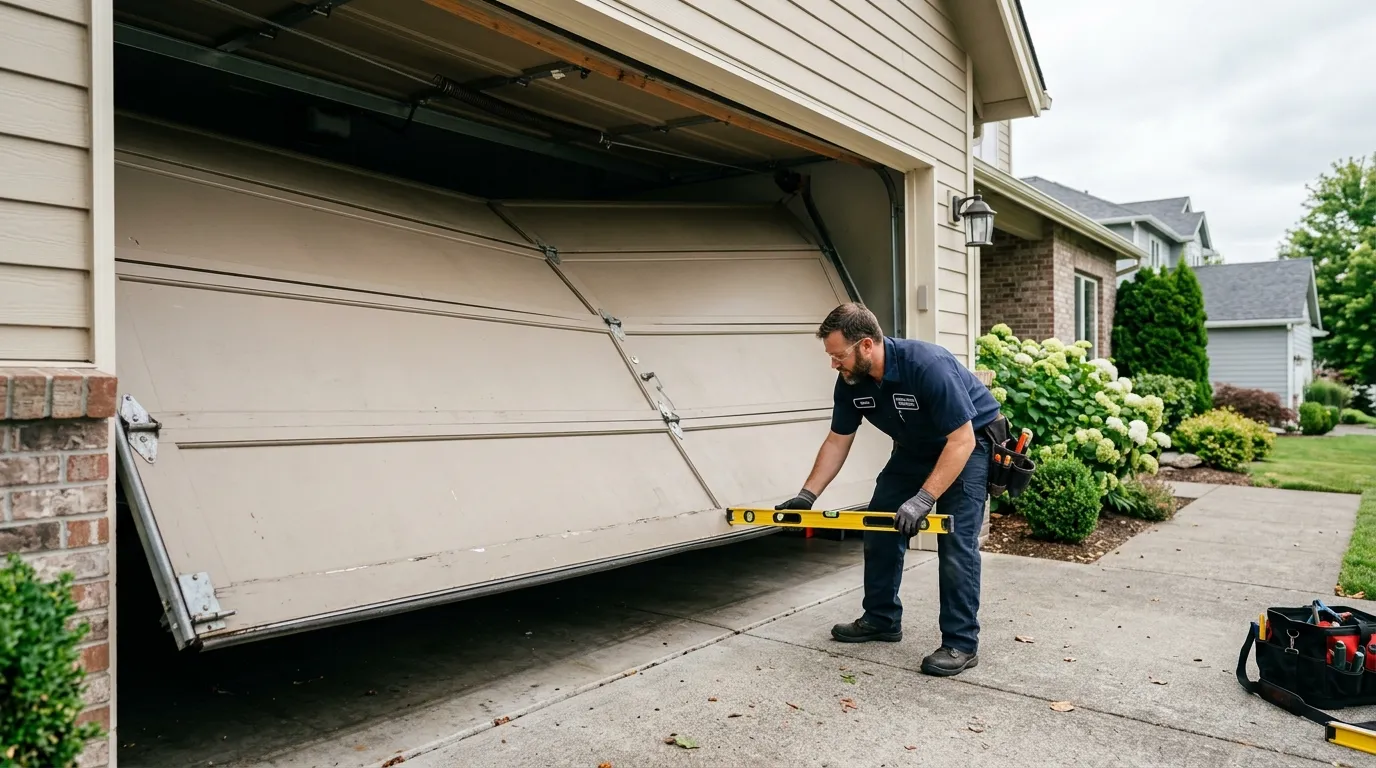
We also see openers that are original to a mid-century retrofit rather than the house itself, chain-drive units bolted onto framing that's shifted slightly over sixty-plus years. That shift throws the door out of square just enough that it binds on one side. It's a small misalignment, but it wears out cables and rollers faster than normal, so a job that looks like "replace one part" often turns into two once we're actually inside the track.
Booking a Visit
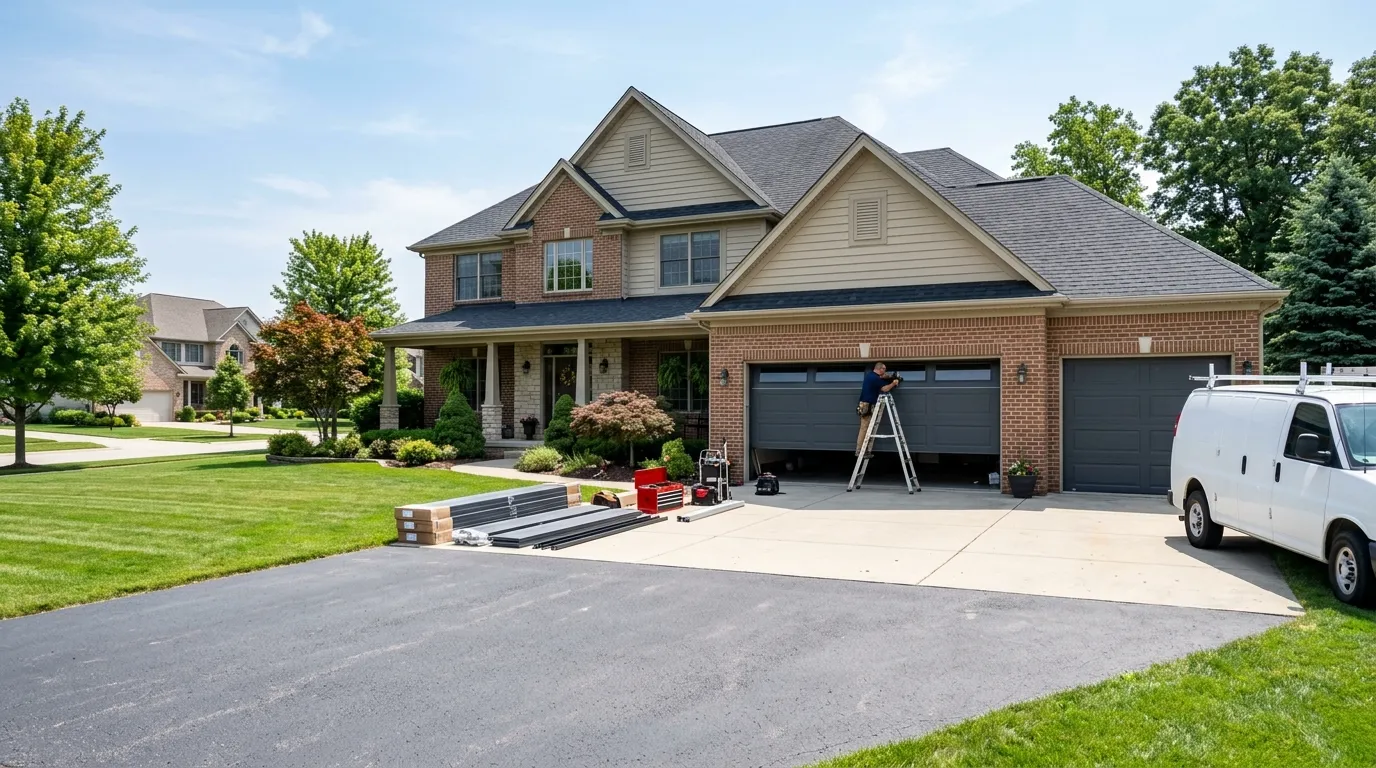
We work this area out of Pasadena, about 8 miles away, so a visit here gets scheduled as a trip rather than a drop-in. Tell us what the door is doing - won't open, opens partway, makes noise, opener runs but nothing moves - and we can usually tell you over the phone whether it's a spring, a cable, or an opener issue before we ever load the truck. That saves everyone time, and it means we bring the right part instead of guessing.
We don't carry a stocked branch in Monterey Park, so anything unusual - a discontinued panel size, an obsolete opener board - may need to be ordered before we can finish the job in one visit. We'll tell you that up front rather than after we've already made the trip.
The DIY Question
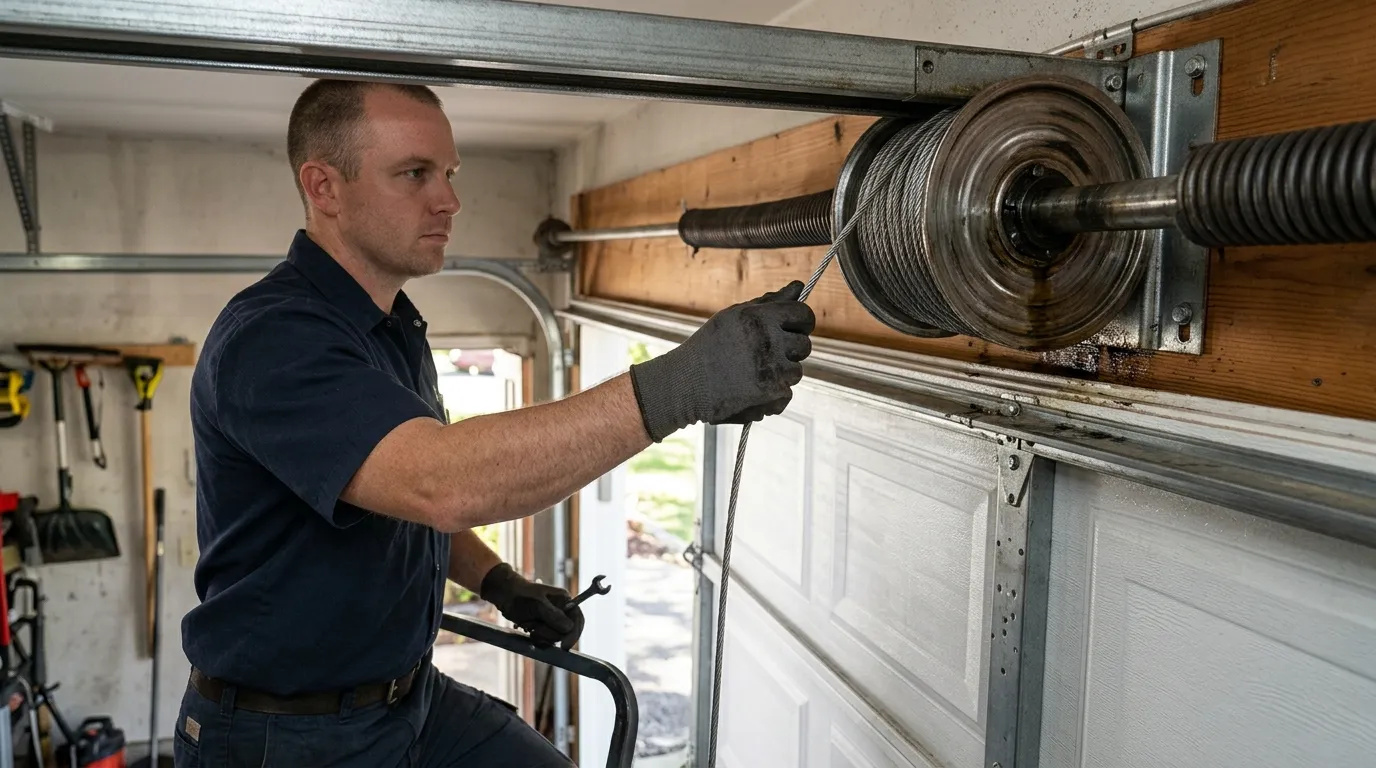
A torsion spring under tension can put someone in the hospital, and that doesn't change based on which suburb the house sits in. If the door is stuck because a spring is broken or badly stretched, that's not a weekend project - the cable and drum assembly on these older setups is under enough load that a slip can take a finger.
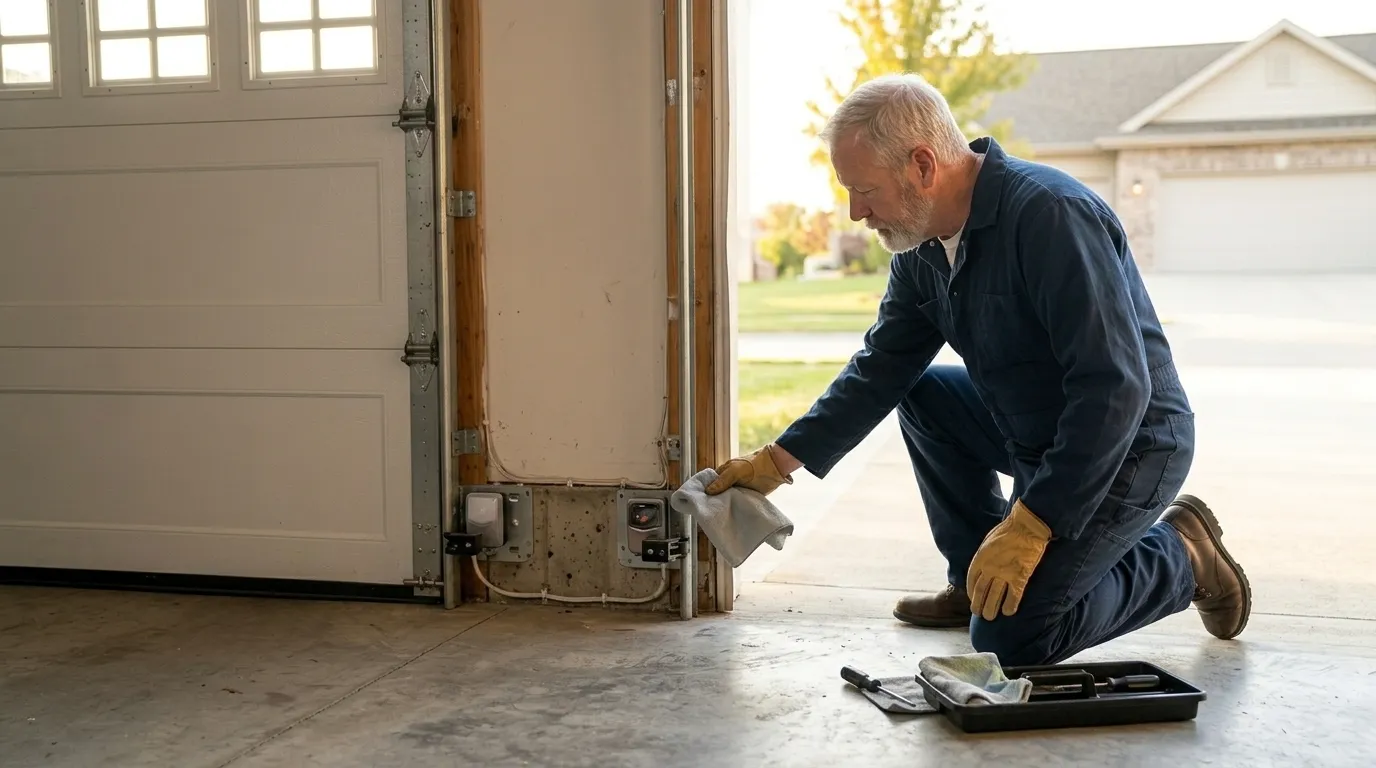
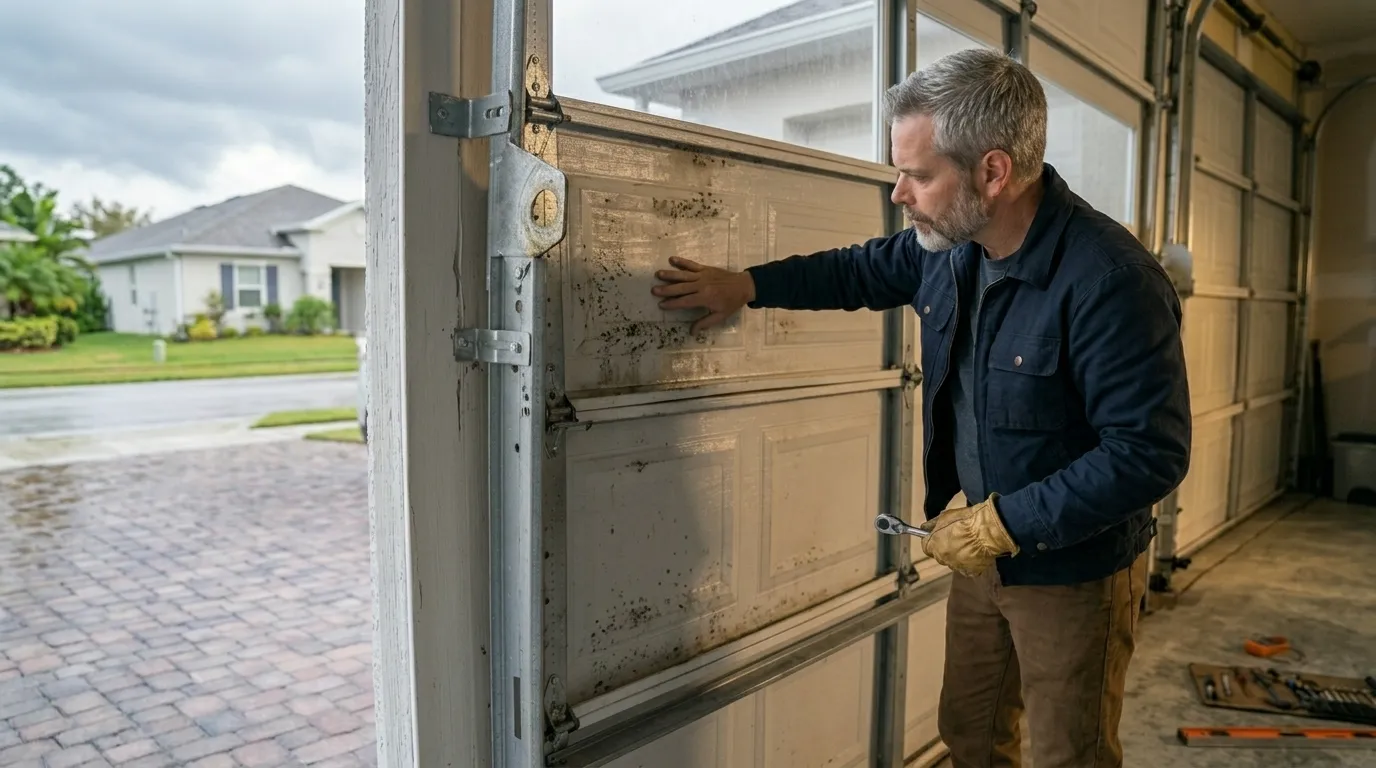
What you can reasonably check yourself: the track for visible dents, the rollers for cracking, and whether the opener's safety sensors are aligned (a blinking light on the unit usually means they're not). If the door runs rough but still runs, a can of garage-door-specific lubricant on the hinges and rollers - not WD-40, which attracts grit - buys you time. Past that, especially on a house old enough to have mismatched hardware from past repairs, it's worth having someone look at it before a small problem becomes a stuck door and a missed morning.
What the Fix Involves
On a typical call in this part of the service area, we're checking three things before touching a wrench: the spring tension, the track alignment, and whether the opener's force settings match the door's actual weight. Because so many of these houses have had at least one prior repair, we don't assume the hardware matches what you'd expect from the build year - we measure it.
Spring replacement on a double door usually means matching the wire gauge and wind direction to the existing drum, not just grabbing a stock size. Track realignment, when the framing has shifted slightly, sometimes means re-shimming the vertical section rather than replacing it outright. We'll walk you through what we find and what it costs before we start, and if a door's hardware is far enough gone that patching it means another call in six months, we'll say that instead of billing you twice.
How it works
From “it’s stuck” to “it’s fixed”
01
Tell us what’s wrong
Describe the symptom - won’t open, loud bang, opener runs but the door won’t move.
02
On-site diagnosis
A technician tests the door under power and by hand and finds what actually failed.
03
Clear, up-front plan
You get the fix that’s needed and what drives the cost - before any work starts.
04
Repaired & tested
The repair is done, the door is set true and tested, and the work area left clean.
Serving Pasadena, CA - tell us what your door’s doing and we’ll take it from there.
Straight answers about garage door repair in Pasadena. Still unsure? Ask us directly.
Why does my garage door in Monterey Park need different parts than a friend's door in Pasadena?
Housing here tends to run a bit newer than Pasadena's overall median build year, which changes what hardware a house started with. A door built in the early 1960s is more likely to have extension springs or a later torsion retrofit than the side-mounted torsion setups common on Pasadena's oldest tracts, so the replacement parts and labor differ.
Do you have a branch or truck stationed in Monterey Park?
No. We operate out of Pasadena, roughly 8 miles from Monterey Park, and schedule visits here as trips rather than drop-ins. That doesn't change response quality, but it does mean we plan the visit around what you tell us on the phone so we bring the right parts the first time.
Is it worth repairing an old opener instead of replacing it?
Depends what's wrong. If the motor still runs strong and it's a sensor or logic board issue, repair usually makes sense. If the opener is original to a decades-old retrofit and parts for it are discontinued, we'll tell you that rather than chase a part that may take weeks to source.