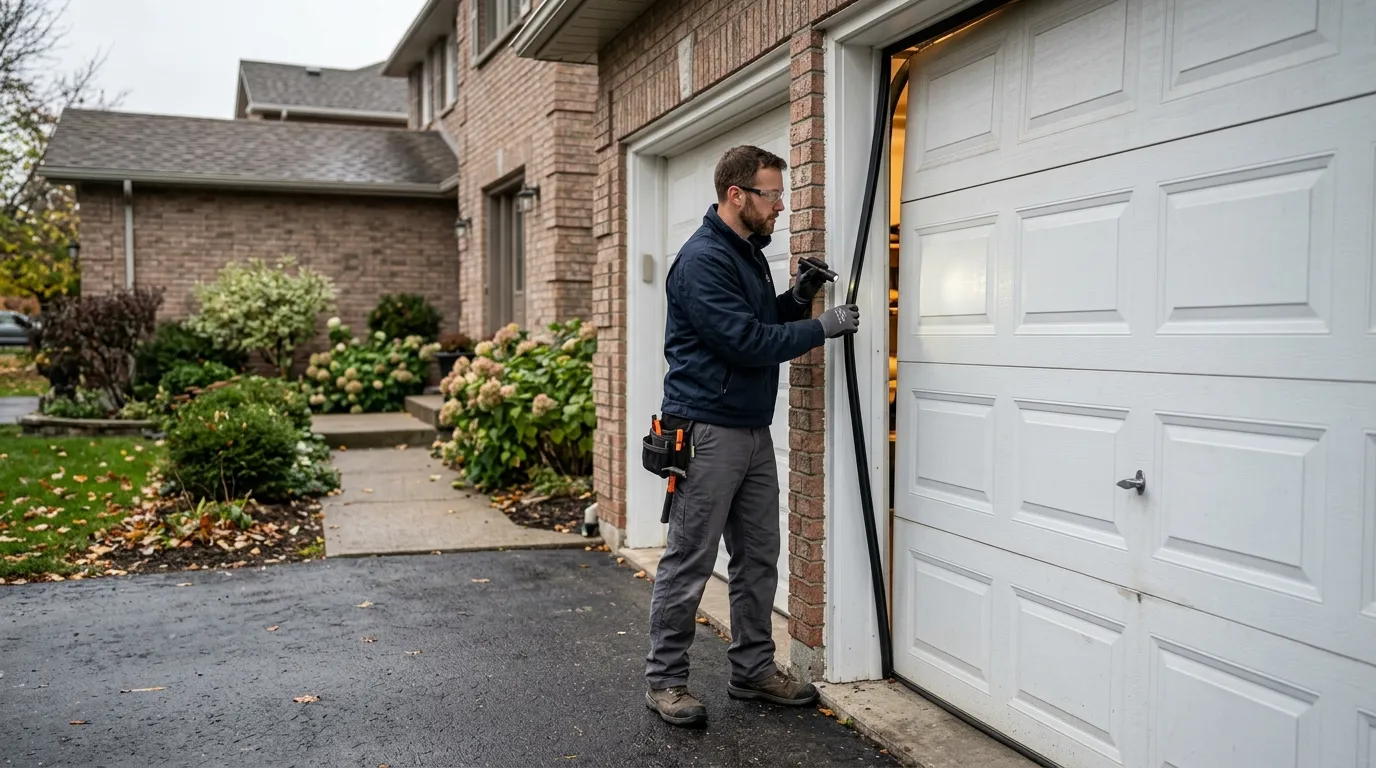
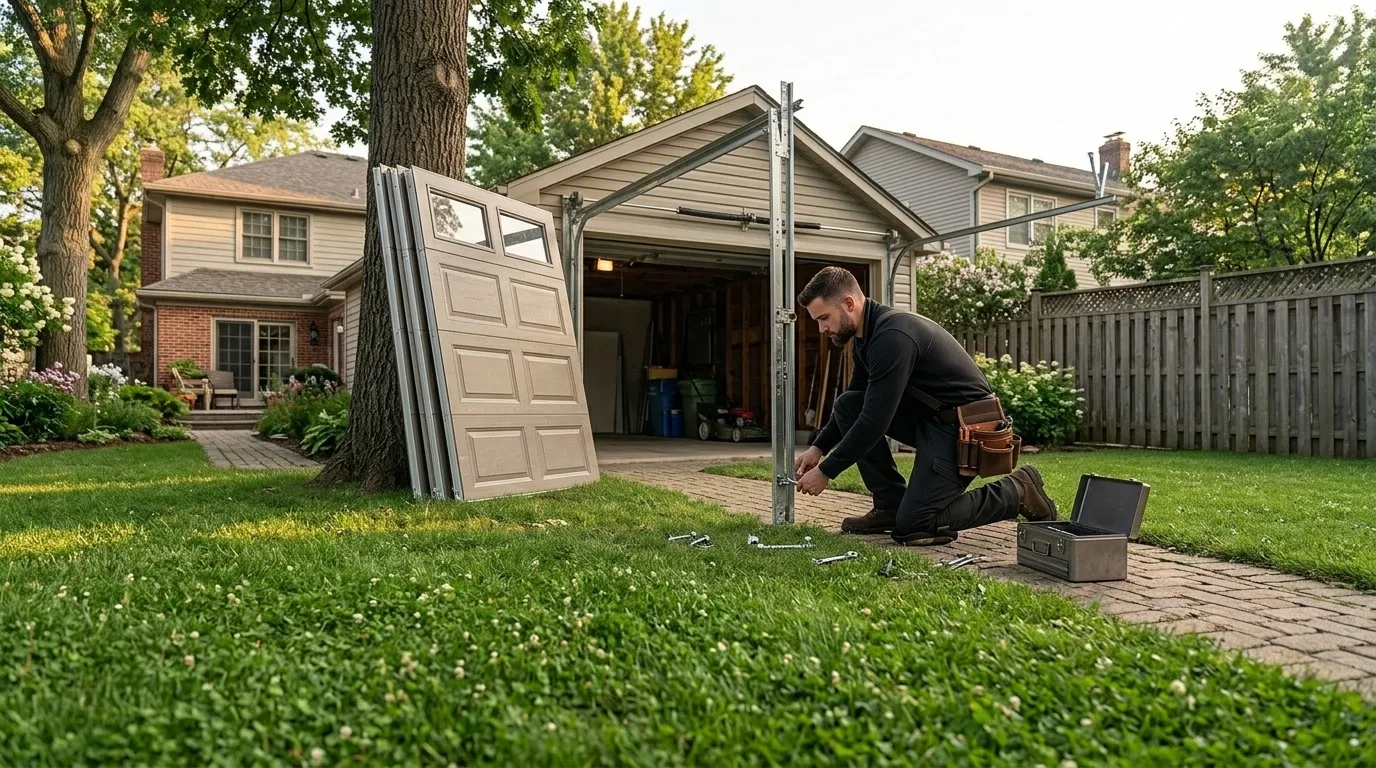
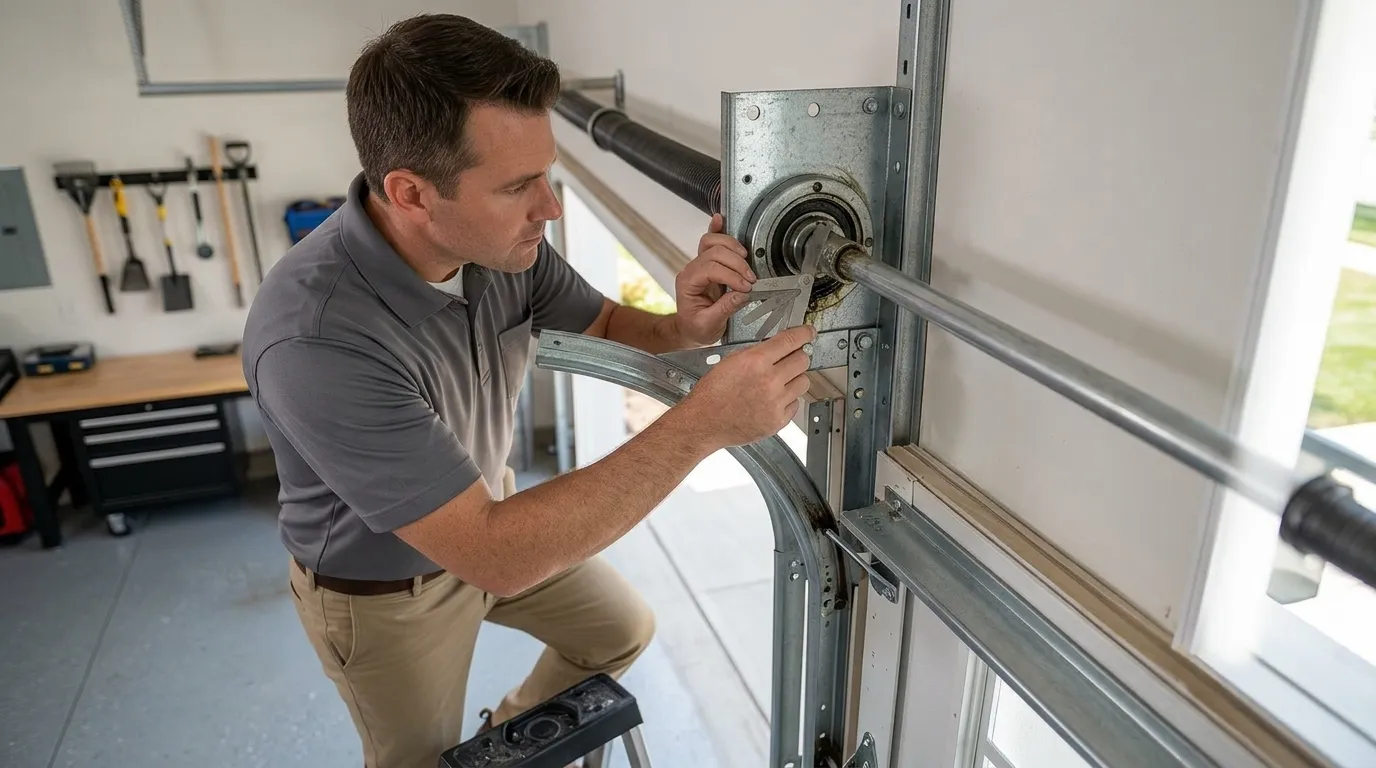
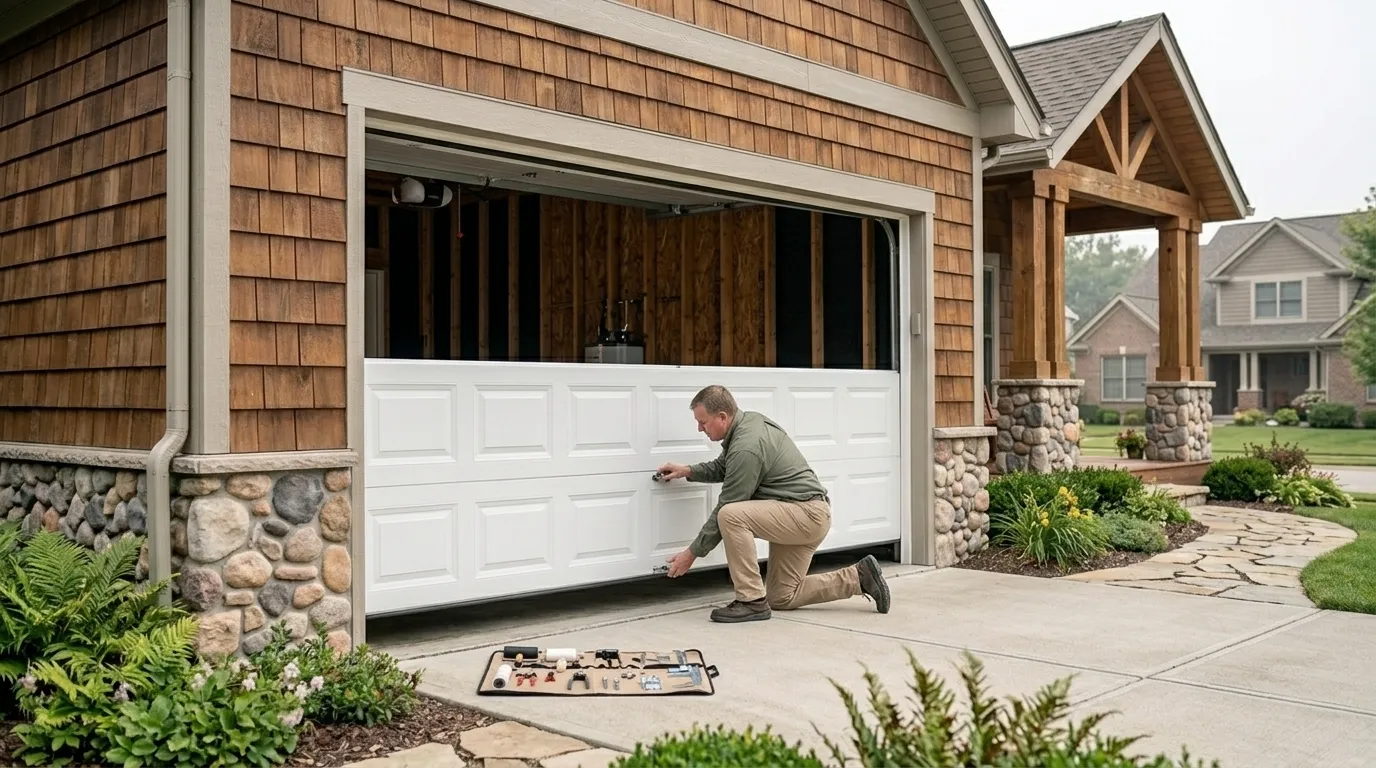
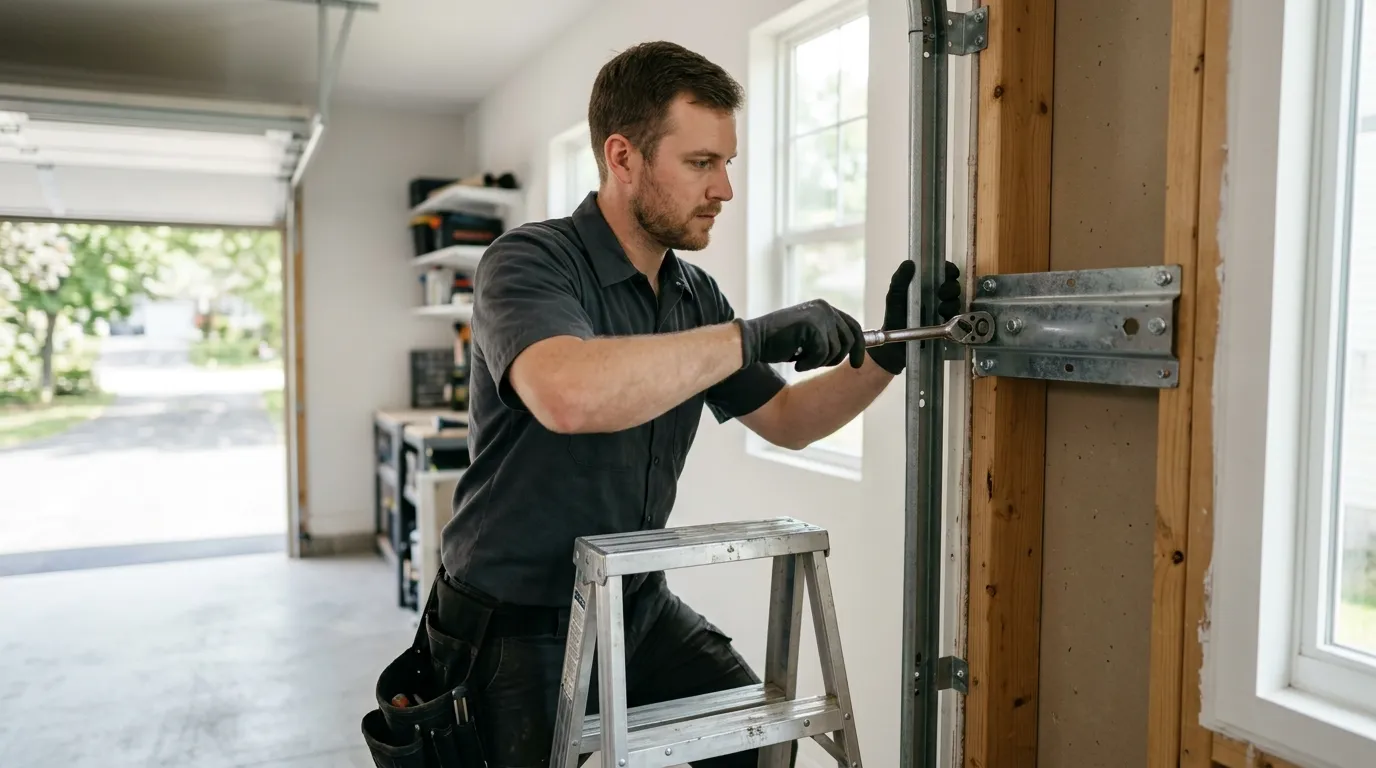
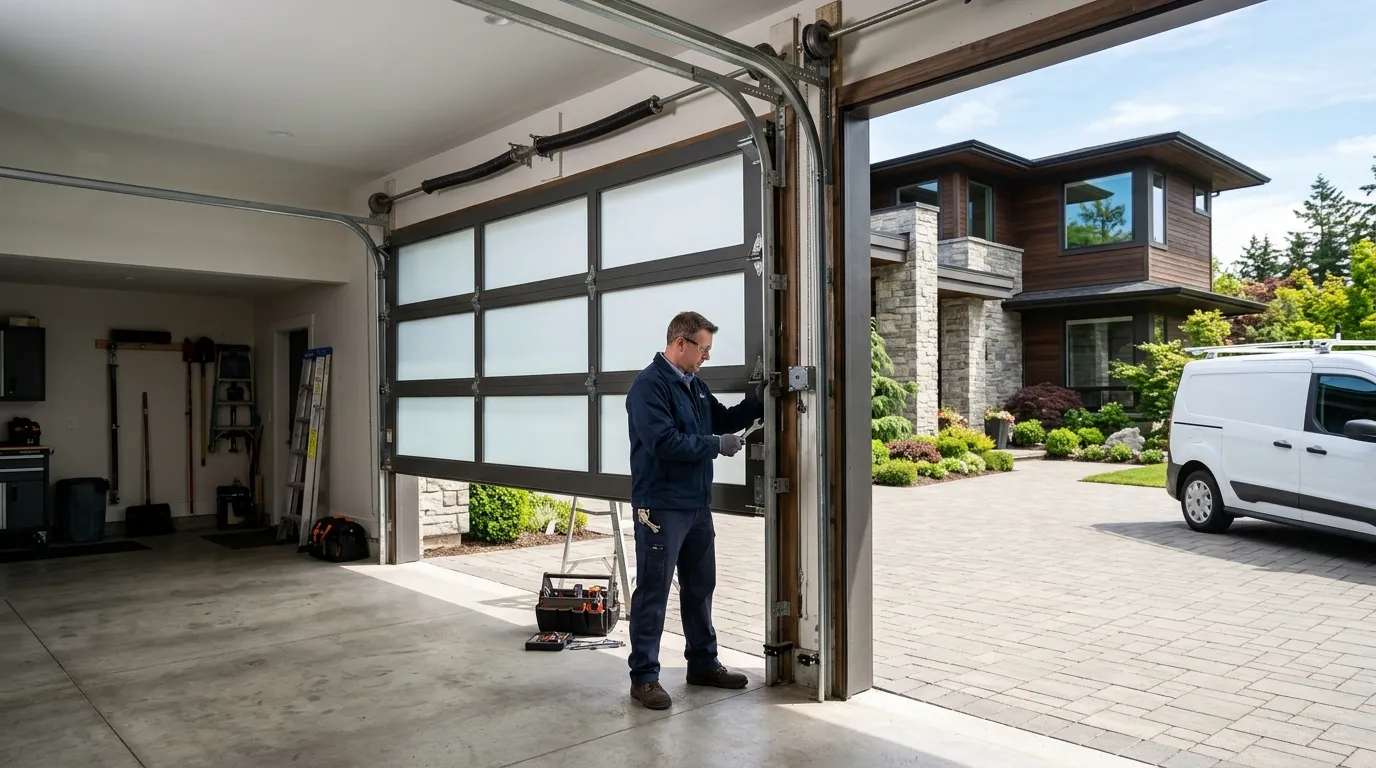
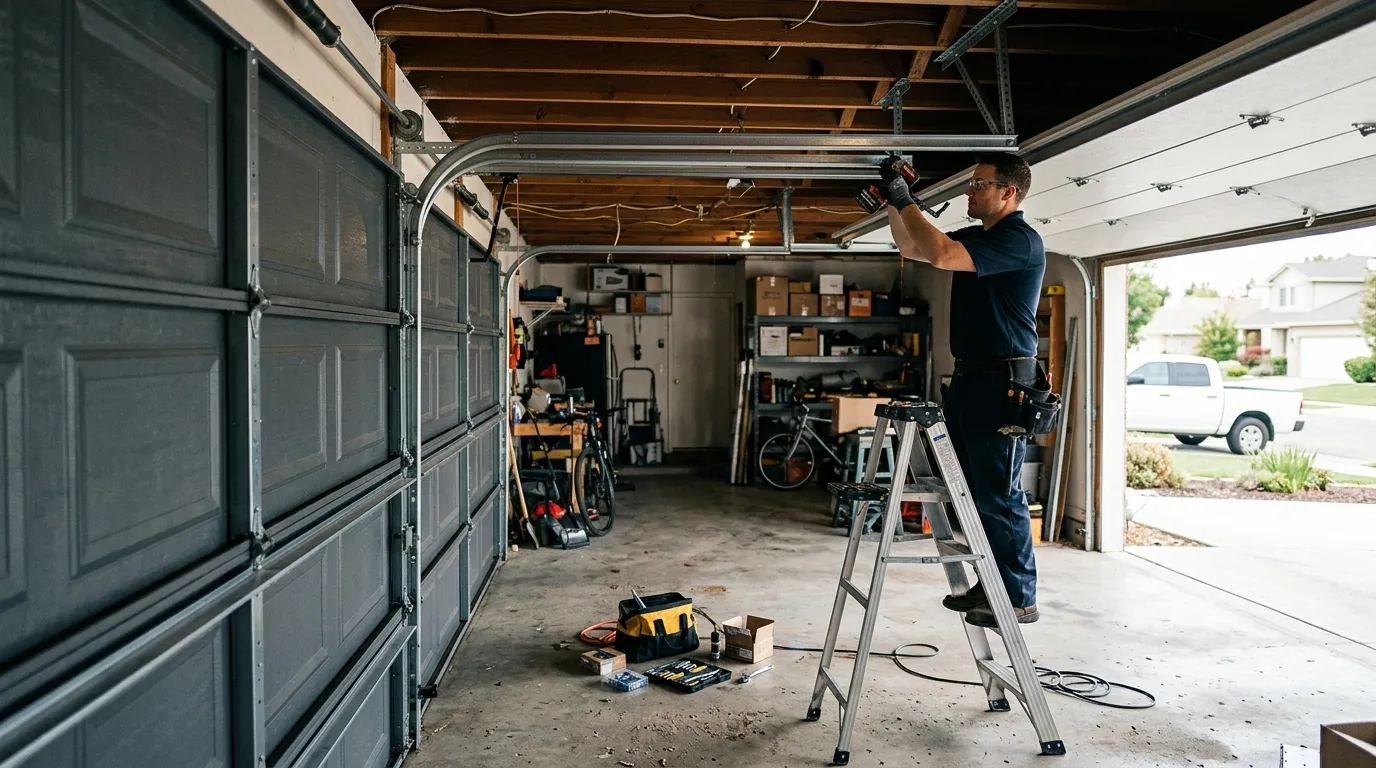
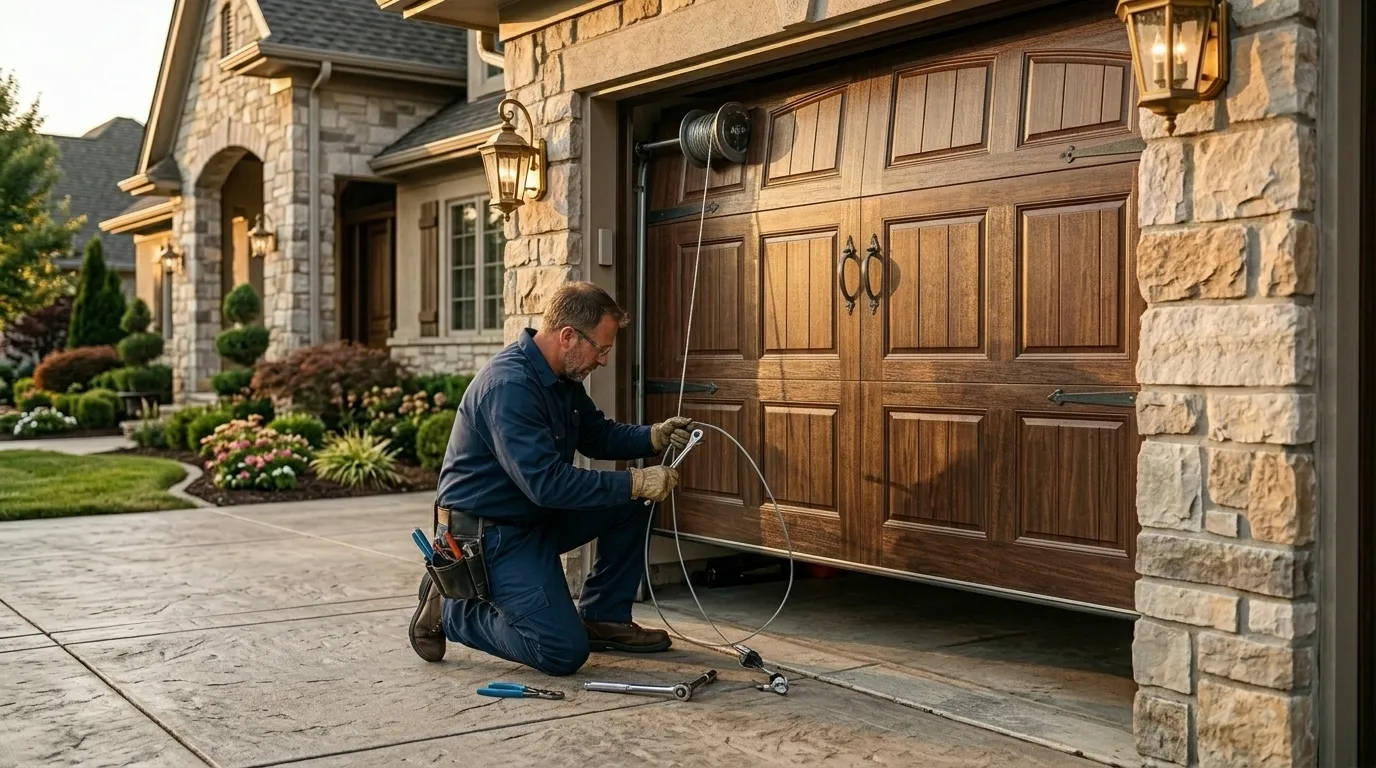
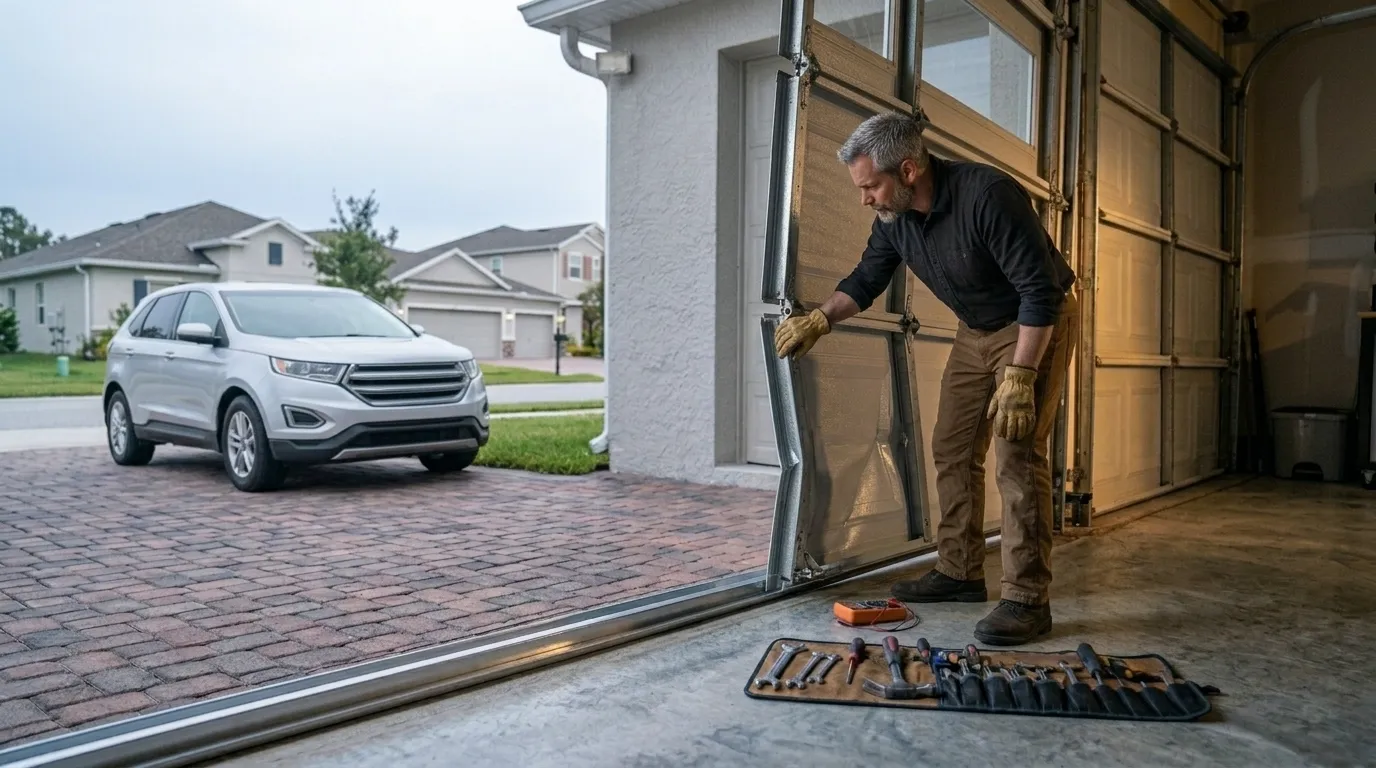
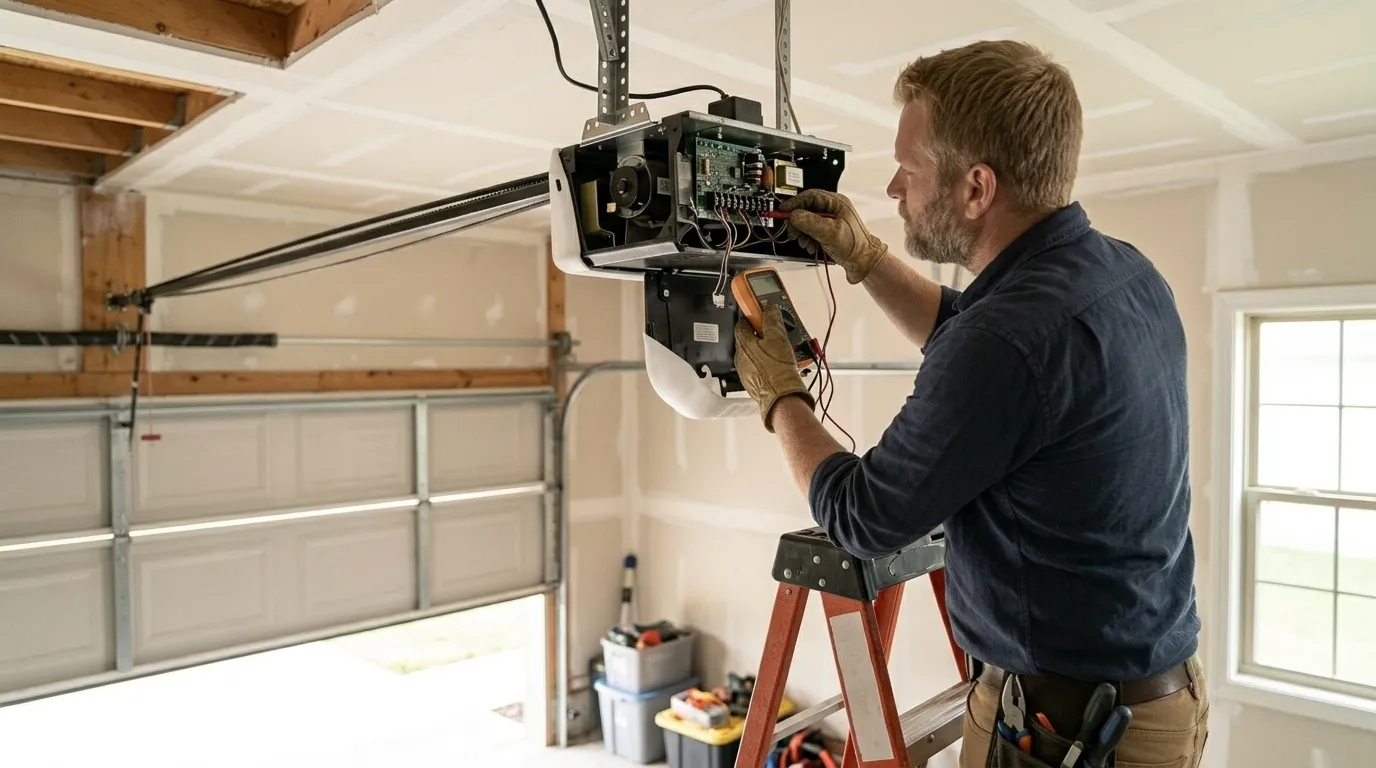
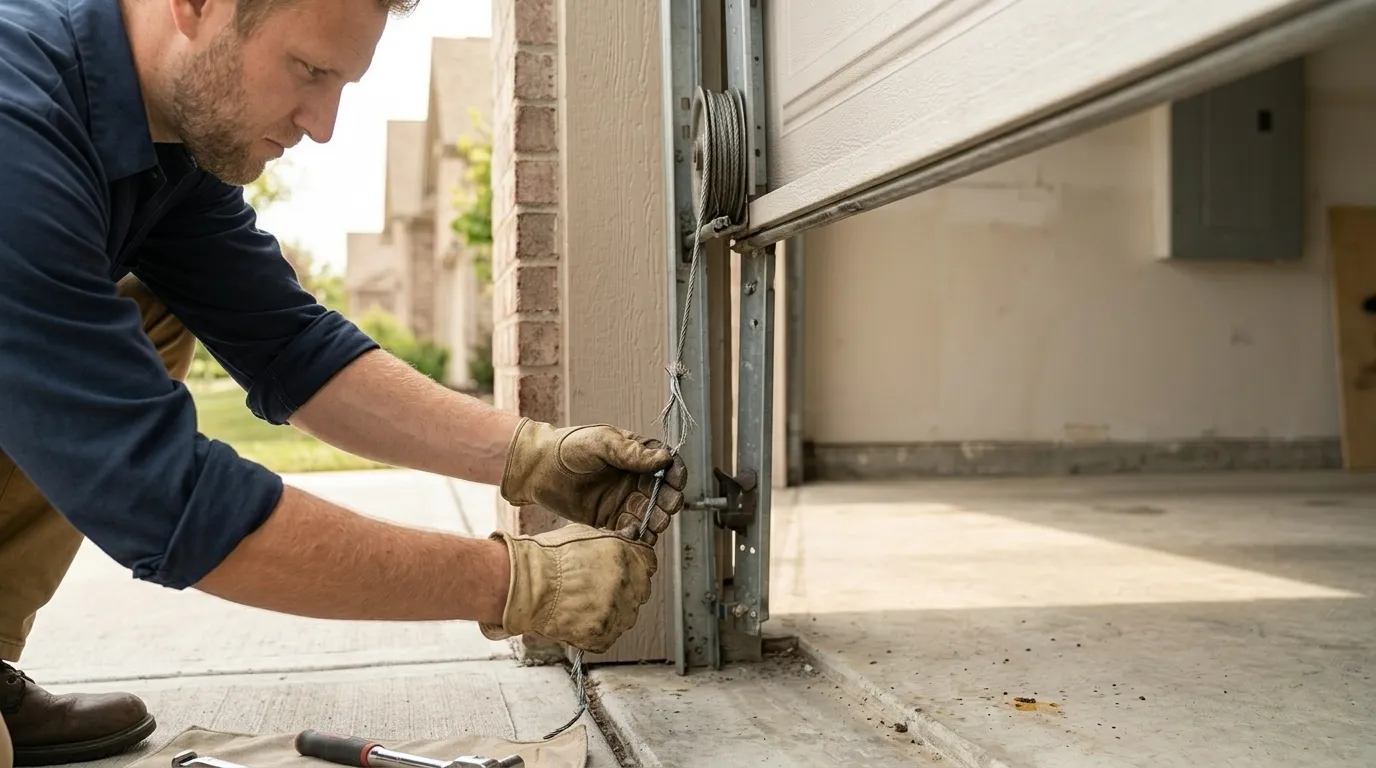
Most emergency calls start the same way: the door won't move, or it moves halfway and stops. Sometimes it's a snapped torsion spring - you'll hear a bang from the garage, usually when it's cold in the morning, and then the door is dead weight. Sometimes it's a cable that's frayed through and finally let go, and the door sits crooked in the track. Other times the opener runs but the door doesn't respond, which usually means a stripped gear or a drive that's come off its rail.
Pasadena's housing stock runs from 1943 up to 2012, with a lot of it clustered around 1959, and that spread matters for what breaks. A door installed when a house was built in the late 1950s has had six-plus decades for hardware to fatigue, corrode at the mounting brackets, or just wear past spec. Newer builds scattered through the same neighborhoods carry different failure points - usually opener logic boards or sensor alignment rather than spring failure.
A door that's off its track, or a spring that's let go with the door still up on its cables, isn't a wait-until-Monday problem. That's the difference between an emergency call and a scheduled one: whether the door is a hazard sitting where it is.